Blog

  1. Home
  2. / Blog
Caliper measuring precision balls for diameter tolerance inspection

A Guide to Spherical Precision Standards and Key Metrics

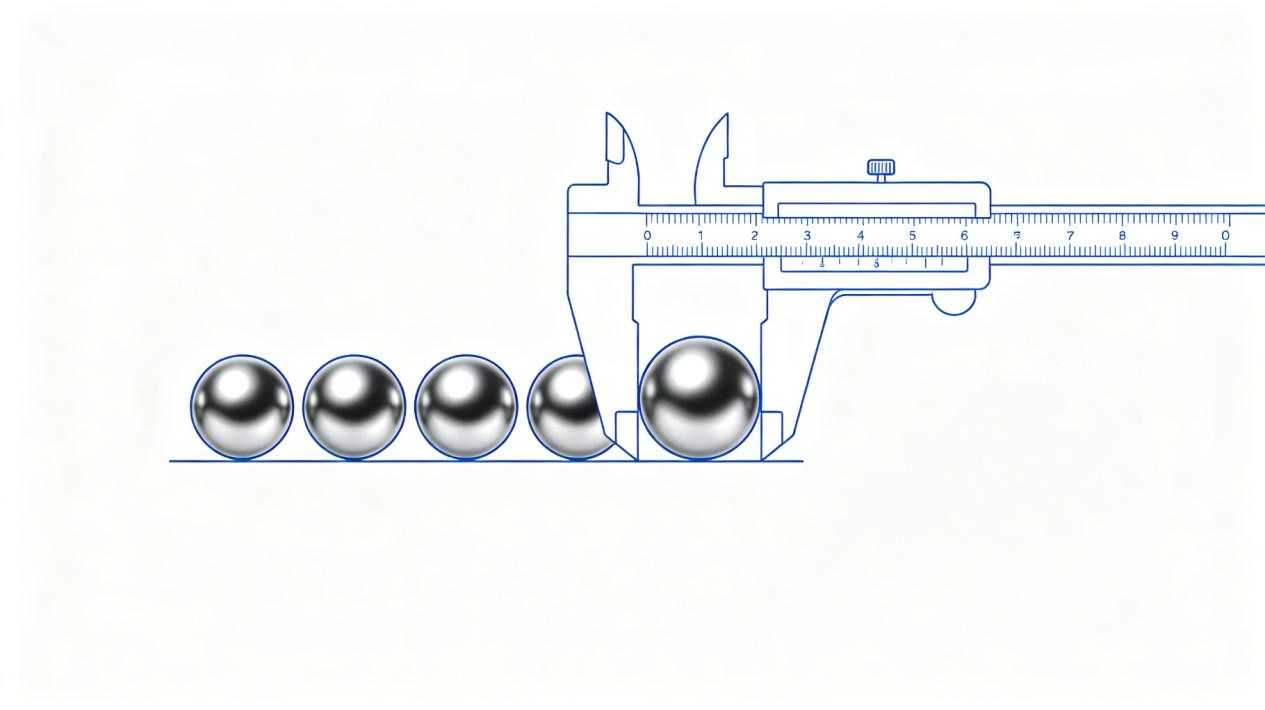
Behind a single millimeter-sized ball lies an entire system of micron-level precision. Introduction In valve seals, VCM motors, precision bearings, and inspection fixtures, tiny precision balls — bearing steel balls, ceramic balls, cemented carbide (tungsten carbide) balls — are critical components that are easy to overlook. When selecting balls, engineers and buyers often get lost in grade designations such as G3, G5, and G10. If a drawing says “G5,” is that the same ball under the Chinese national standard, the U.S. ABMA, ISO, German DIN, and Japanese JIS? And what do all those symbols — Vdws, ΔSph, Vdwl — actually mean on the shop floor? This article skips the theory and answers three things: how the five major standards relate to each other, how to read the five core metrics, and where buyers most often go wrong. 01 Five major standards: one ball, five sets of rules Five precision systems are most commonly referenced in the industry: Standard Full name Where it is typically used GB/T 308.1 Chinese National Standard — rolling bearing balls General standard for bearing steel balls in China; cemented carbide balls refer to JB/T 9145 ABMA 10A American Bearing Manufacturers Association North American equipment, imported valves, foreign-invested projects ISO 3290 International Organization for Standardization The global baseline; most national standards are modeled on it DIN 5401 German Institute for Standardization (DIN) European precision equipment and German-made machinery JIS B 1501 Japanese Industrial Standard Japanese equipment, and spares for Japanese/Korean production lines Important note: identical grade designations do not mean unconditional interchangeability. Although G3/G5/G10 carry the same numbers across standards, the test criteria, measurement conditions, and sorting rules behind them differ in detail. For export projects, confirm the original standard your customer cites; for domestic substitution projects, select against GB/T 308 together with the actual operating conditions. Grade comparison: the smaller the number after “G”, the tighter the tolerance ISO 3290 is the international baseline, and China’s GB/T 308.1 is substantially equivalent to it. DIN 5401 aligns with the ISO grades, and the JIS B 1501 grade sequence is essentially the same. ABMA 10A was originally written in imperial units, which is why you often see an “A” suffix (G5A, G10A). In plain terms: the smaller the number after the “G”, the smaller the permitted error, and the better the ball’s roundness and dimensional consistency. GB/T 308.1 ISO 3290 DIN 5401 JIS B 1501 ABMA 10A G3 G3 G3 G3 G3 G5 G5 G5 G5 G5A G10 G10 G10 G10 G10A G16 G16 G16 G16 G16A G20 G20 G20 G20 G20A The grade sequences line up, but the actual tolerance limits are governed by the text of each individual standard. 02 Five core metrics: what each symbol actually means Five key metrics, one for each dimension of ball quality. Ball diameter variation (Vdws) — is the ball the same diameter in every direction? In plain terms: measure one ball’s diameter in different directions; Vdws is the difference between the largest and smallest reading. If this value runs high, the ball is effectively a flattened ellipsoid. At high speed that shows up as runout, vibration, and noise. In sealing applications, an ellipsoidal ball cannot form a complete circular sealing line against the seat, which leads directly to leakage. Deviation from spherical form (ΔSph) — how far from a perfect sphere? In plain terms: how far the ball’s outer surface deviates from a mathematically perfect sphere. In a perfect sphere, every point on the surface is the same distance from the center. The larger ΔSph is, the more likely the surface has local high or low spots. Under load, those spots concentrate stress and are prone to denting; at a sealing face, point contact causes seal failure. Where cemented carbide balls run against valve seats, ΔSph is the metric that matters most. Lot diameter variation (Vdwl) — how uniform is the batch? In plain terms: within one delivered lot, the size difference between the largest and the smallest ball. Perfect roundness on a single ball is not enough — every ball in the lot needs to be as close in size as possible. In multi-ball drives, caged bearings, counterweights, and multi-ball positioning, a lot with scattered sizes means uneven loading, jamming, and wobble. Many customers check only single-ball specifications and ignore lot consistency — and that is usually where assembly problems come from later. Surface roughness (Ra) — how smooth is the surface, microscopically? In plain terms: the degree of micro-level unevenness on the ball surface. The lower the Ra value, the smoother the surface. Under high-speed friction, rough surfaces generate heat and wear faster. In precision sealing, even a tiny high spot or scratch becomes a leak path for the medium. After fine grinding, cemented carbide balls can reach Ra 0.01 μm for demanding sealing applications. Nominal diameter deviation — how far from the drawing’s nominal size? In plain terms: how much the actual ball size is allowed to differ from the nominal dimension on the drawing. If the drawing calls for φ3 mm, how many microns plus or minus are permitted? Many engineers look only at the G5 grade and ignore the nominal diameter tolerance band. The grade is a baseline; a drawing can always tighten tolerances further. Two G5 orders can therefore carry quite different dimensional limits. 03 Selection pitfalls: three practical rules Don’t order by grade alone A purchasing specification should not say only “G5 cemented carbide balls”. Write down: the standard and its version (for example GB/T 308.1-2013), the nominal diameter, the limits for the five metrics above, and the surface quality requirement. The more complete the specification, the smaller the surprise on delivery. Replacing an imported part with a domestic ball? Verify the limits first If the original equipment drawing cites ABMA, check that the limits for deviation from spherical form, surface roughness, and lot diameter variation are consistent before you substitute a GB/T G5 ball. Confirm the metrics are equivalent first — otherwise you can end up with vibration or seal leakage after
Read More
cemented carbide balls tungsten steel banner

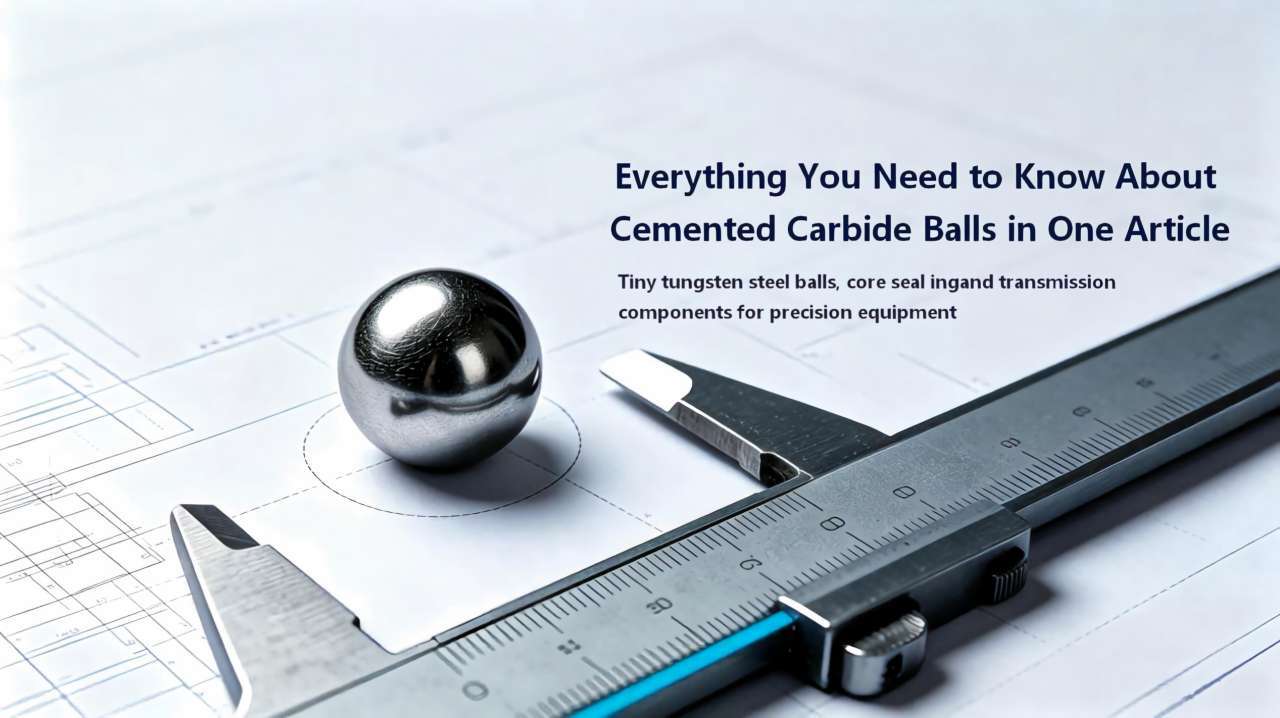
Everything You Need to Know About Cemented Carbide Balls in One Article

In the field of precision manufacturing, industry attention often focuses on large-scale equipment and complex structural components, making it all too easy to overlook small, basic components. Although cemented carbide balls (commonly known as tungsten steel balls) are unassuming miniature components, they directly determine the sealing precision, transmission stability, and overall service life of precision equipment, making them core industrial components essential for the long-term, stable operation of high-end machinery. At JNE New Material, we manufacture YG and YN series cemented carbide balls in diameters from 0.5 mm to 50 mm, with custom grades and sizes available on request. What Are Cemented Carbide Balls? Cemented carbide balls are high-precision spherical components manufactured using advanced powder metallurgy technology, with tungsten carbide as the hard matrix and cobalt or nickel as the binder phase. The industry primarily categorizes them into two main series: the YG series (tungsten-cobalt alloy) and the YN series (non-magnetic tungsten-nickel alloy). Compared to ordinary steel balls and bearing steel balls, the performance of both series of cemented carbide balls has been comprehensively upgraded. They address the pain points of traditional balls—such as susceptibility to wear, deformation, and corrosion, as well as poor precision—and can be specifically tailored to meet the precision manufacturing needs of different strengths, media, and operating conditions. They are currently the core foundational components in industrial precision manufacturing. Core Physical and Chemical Properties The outstanding adaptability of cemented carbide balls to various operating conditions stems from their stable and superior physical and chemical properties. At the same time, the YG and YN series exhibit significant differences in their properties due to variations in the binder phase material; this is the fundamental reason why these two product lines are suited for different operating conditions. Physical and Chemical Properties of Major Grades ① Physical Properties (by Grade): Property YG3X YG6 YG6X YG8 YG8N YG13 YN6 YN9 YN10 Test Condition Main Composition WC 97% Co 3% WC 94% Co 6% WC 94% Co 6% WC 92% Co 8% WC 91% Co 8% TaC 1% WC 87% Co 13% WC 94% Ni 6% WC 91% Ni 9% WC 90% Ni 10% Material specification Density (g/cm³) 15.0–15.3 14.7–15.0 14.7–15.0 14.5–14.9 14.8–14.9 14.0–14.4 14.5–14.9 14.2–14.6 14.0–14.4 Room temperature (23°C) Rockwell Hardness (HRA) 92–93.5 89.5–91 90–91.5 89–89.5 89.5–91.5 86–88 89–91 89–90 87–89 Room temperature (23°C) Flexural Strength (MPa) 1300–1800 1450–1600 1350–1700 1800–2300 1500–2000 2400–2800 1400–1800 1600–2000 1600–2200 Room temperature (23°C) Fracture Toughness (MPa·m1/2) 10–12 13–14 12–14 14–16 13–15 16–18 12–14 13–15 14–16 Room temperature (23°C) Temperature Resistance (°C) 400–500 400–500 400–500 400–500 400–500 400–500 400–500 400–500 400–500 23–1000°C Wear Resistance (Volumetric Wear Rate, mm³/(N·m)) ≤ 0.005 ≤ 0.008 ≤ 0.007 ≤ 0.01 ≤ 0.009 ≤ 0.02 ≤ 0.01 ≤ 0.015 ≤ 0.02 Dry sliding wear, room temperature Magnetic Properties Magnetic Magnetic Magnetic Magnetic Magnetic Magnetic Non-magnetic Non-magnetic Non-magnetic — ② Chemical Properties (by Grade): Property YG3X YG6 YG6X YG8 YG8N YG13 YN6 YN9 YN10 Test Condition Acid Resistance (Mass Loss Rate, %) < 0.1 < 0.1 < 0.1 < 0.1 < 0.1 < 0.1 < 0.1 < 0.1 < 0.1 Room temperature, 24 h, 10% hydrochloric acid Alkali Resistance (Mass Loss Rate, %) < 0.5 < 0.5 < 0.5 < 0.5 < 0.5 < 0.5 < 0.5 < 0.5 < 0.5 Room temperature, 24 h, 5% sodium hydroxide Resistance to Organic Solvents (Mass Loss Rate, %) < 0.05 < 0.05 < 0.05 < 0.05 < 0.05 < 0.05 < 0.05 < 0.05 < 0.05 72 h at room temperature, in ethanol/acetone High-Temp Oxidation Resistance (Mass Change Rate, %) < 0.2 < 0.2 < 0.2 < 0.2 < 0.2 < 0.2 < 0.2 < 0.2 < 0.2 1000°C, 100 h, in air High-Temp Acid & Alkali Corrosion Resistance (Mass Loss Rate, %) < 0.5 < 0.5 < 0.5 < 0.5 < 0.5 < 0.5 < 0.5 < 0.5 < 0.5 800°C/24 h, 20% sulfuric acid, 5% sodium hydroxide Thermal Shock Resistance (°C) 200–300 200–300 200–300 200–300 200–300 200–300 200–300 200–300 200–300 Rapid heating/cooling, no cracking Note: Data in this table is compiled from published material property tables of major cemented carbide grades and is provided for reference and comparison purposes. Exact values may vary by batch and manufacturing process — contact us for datasheets of specific grades. Full parameter table (including corrosion resistance, thermal conductivity, wear resistance and creep data for each grade): Precision Manufacturing Process The high precision and stability of cemented carbide balls rely not only on high-quality base materials but also on a standardized, meticulous powder metallurgy manufacturing process. Each step is subject to strict control to ensure consistent product quality. Precise Powder Blending: Formulations are tailored to each product series. The YG series uses a tungsten carbide + cobalt-based binder formulation, while the YN series employs a tungsten carbide + nickel-based binder formulation without added cobalt. For certain grades, trace amounts of TiN are added to refine grain size and enhance corrosion resistance. Thorough mixing via wet ball milling ensures uniform powder particle size and composition, establishing the performance differences between the two product lines at the source. Electronics and Digital Industry (YN Series): The YN series is non-magnetic, high-precision, and ultra-clean, free from magnetic interference. It is widely used in VCM (voice coil motors) and precision optical components, performing critical precision transmission functions such as lens autofocus and optical image stabilization. Precision Testing Instruments (YN Series): The YN series features stable material properties, is non-magnetic and corrosion-resistant, and exhibits minimal measurement error. It can be used as indenters for hardness testers, standard calibration spheres, and precision testing fixtures. General Industrial Applications (YG Series): The YG series offers excellent value for money and is wear-resistant and durable. It is widely used in precision bearings, pump seals, mechanical counterweights, sandblasting and grinding, and automated transmission equipment. Selection Guide: YG or YN? For general wear resistance, high-pressure sealing, mechanical counterweights, and general industrial applications, prioritize the YG series, which offers a balance of performance and cost-effectiveness. For non-magnetic environments, precision electronics, optical inspection, chemical corrosion, and high-cleanliness conditions, the YN series must be selected to avoid magnetic interference

Read More
products we offer

Products We Offer

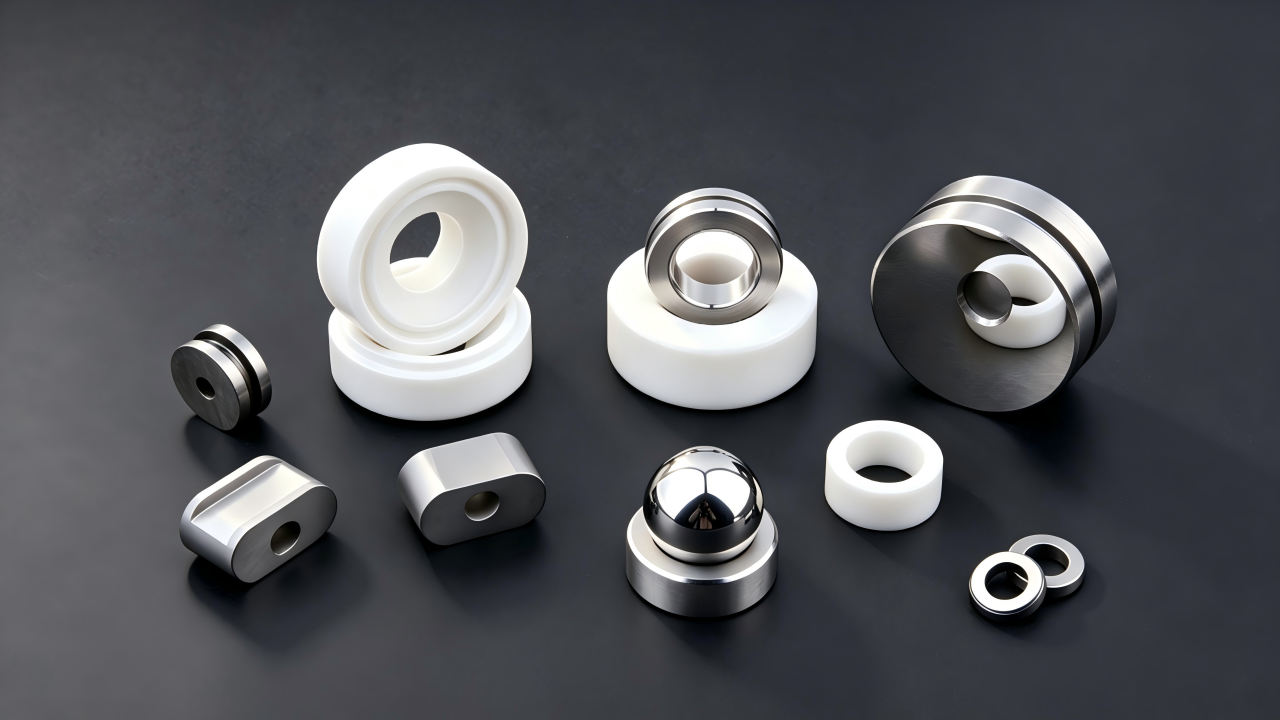
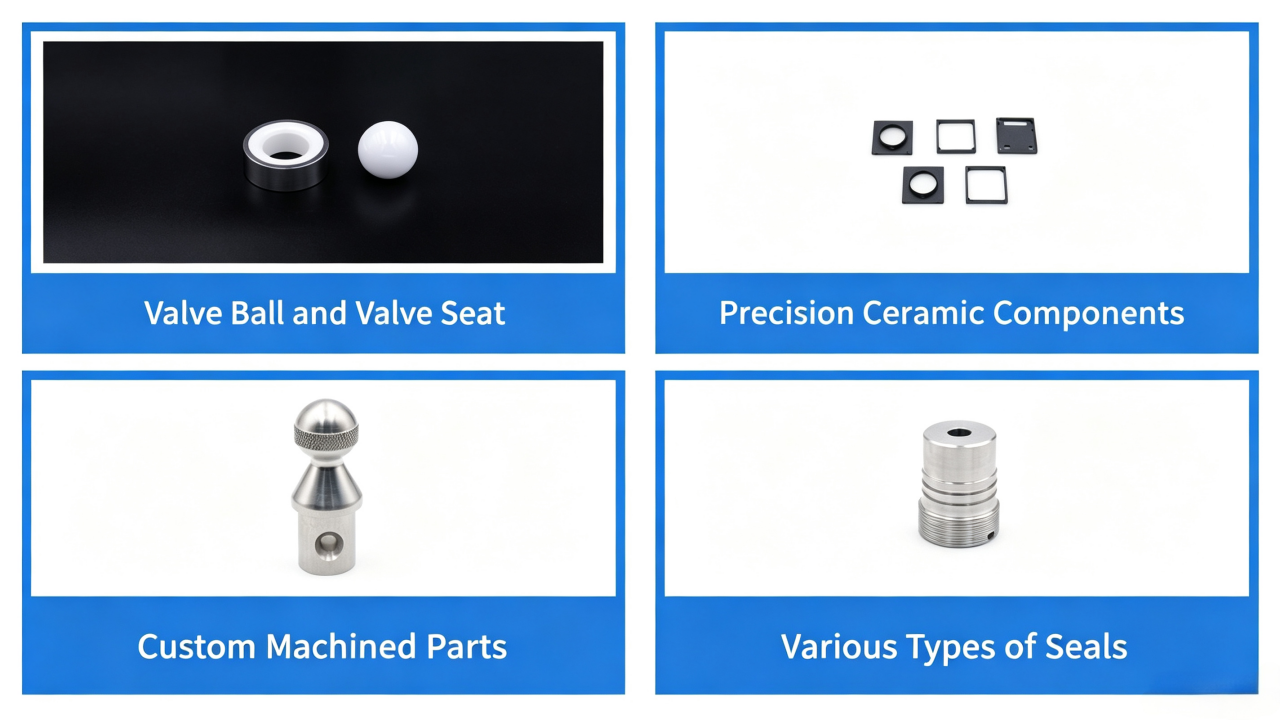
Major Product Categories High-precision spherical components, bearings and bearing assemblies,valve balls and seats, customized precision irregular-shaped parts Machinable and Applicable Materials Ceramics (zirconia, alumina, silicon nitride, silicon carbide, etc.) Cemented carbides (YG3X, YG6, YG6X, YG8, YG8N, YG13, YN6, YN9, YN10, etc.) Monel alloys (MONEL K400, MONEL K450, MONEL K500, etc.) Stainless Steel (304, 316, 316L, 410, 420, 440C, etc.) Inconel Alloys (Inconel 600, Inconel 601, Inconel 625, Inconel 718, etc.) Stellite Alloys (Stellite 6B, Stellite 1, Stellite 4, STELLITE 8, STELLITE 12, STELLITE 20, etc.) Pure metals (aluminum, copper, iron, etc.) Other metals (bearing steel CGr15, titanium alloy TC4, Hastelloy C276, etc.) Plastics (POM, PP, PA, BB, PEEK, PTFE, etc.) Glass (optical glass, etc.)

Read More
comparison of performance and applications of four major ceramic ball materials

Comparison of Performance and Applications of Four Major Ceramic Ball Materials: Zirconia / Alumina / Silicon Carbide / Silicon Nitride Ceramic Balls

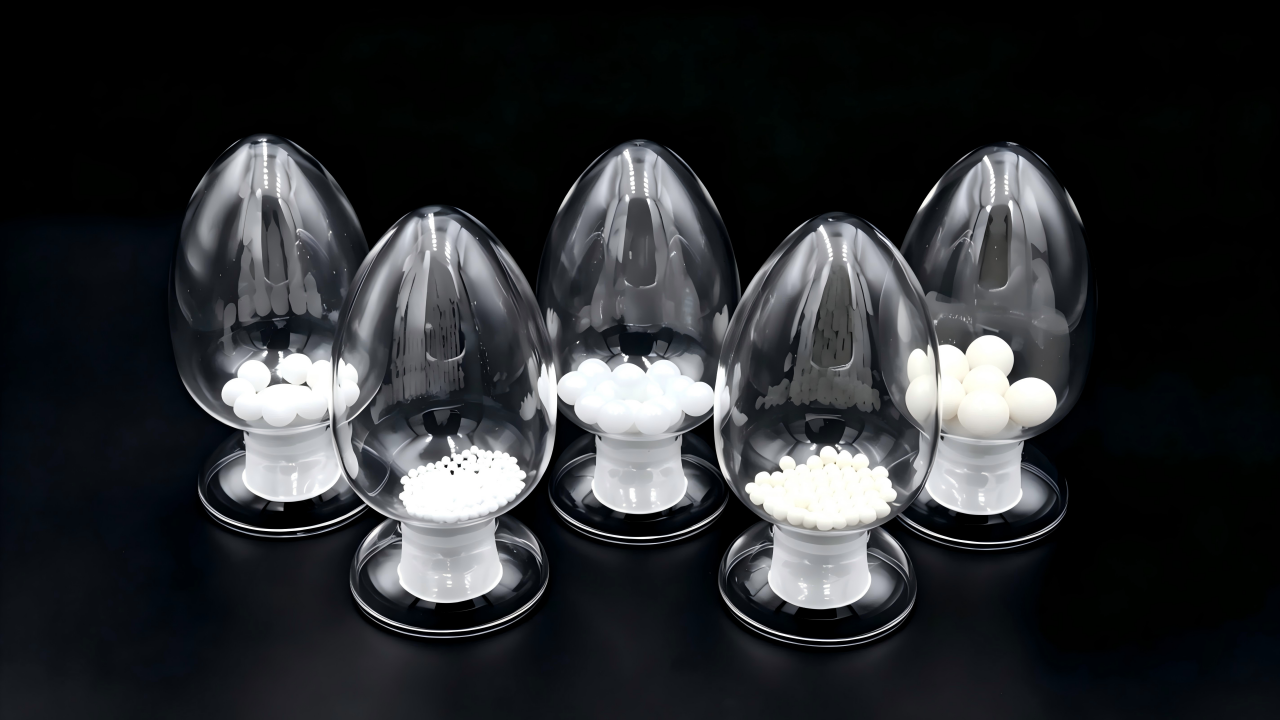
Ceramic balls are widely used in precision bearings, medical devices, aerospace, automotive, and high-temperature corrosion-resistant equipment. Ceramic balls made from different materials exhibit significant differences in core properties such as hardness, density, temperature resistance, and corrosion resistance. Below is a comparison table of the parameters for four mainstream ceramic ball types to assist with product selection.   Parameter Zirconia Ceramic Balls Alumina Ceramic Balls Silicon Carbide Ceramic Silicon Nitride Ceramic Balls Product Image Appearance Milky white/beige High-gloss, fine surface Extremely high surface finish Pure white   Hard texture   Neat and uniform appearance Blackish-gray   Matte finish   Dense and compact texture Grayish-black Smooth   matte finish   Precision-polished, burr-free   Density(g/cm³) 6.05 3.9 3.2 3.25 Rockwell Hardness(HRA) 89-90 88-89 92-93 91-92 High-Temperature Resistance (°C) 1000°C 1200°C 1600°C 1300°C Compressive Strength(MPa) 2000 1800 2200 2100 Corrosion Resistance Resistant to acids and alkalis Corrosion-resistant   Excellent aging resistance Resistant to weak acids and alkalis   Use with caution in strong acid and alkali environments Extremely high corrosion resistance   Resistant to strong acids and alkalis   Resistant to solvent erosion Superior corrosion resistance   Suitable for various harsh chemical environments   Insulation Properties High insulation   Non-conductive   Anti-static Ultra-high insulation   Stable electrical performance Semi-insulating   Weak electrical conductivity High insulation   High-temperature resistance without electrical leakage   Key Features Excellent toughness   Resistant to chipping and cracking   High surface finish   Wear-resistant and quiet   high precision High cost-effectiveness   sufficient hardness   good insulation   high-temperature and oxidation resistance   uniform texture   extremely versatile Ultra-hard and ultra-wear-resistant   ultra-high temperature resistance   superior corrosion resistance   low coefficient of friction   resistant to high temperatures and pressures   extremely long service life High toughness   thermal shock resistance   resistance to alternating high and low temperatures   wear and fatigue resistance   lightweight   resistant to heat buildup and damage during high-speed operation Major Application Industries Precision bearings   Medical devices   Food processing machinery   Valves and valve cores   Electronic equipment   Precision Instruments   High-Speed Transmission Components Chemical Packing   Grinding and Polishing   Hardware Components   Seals   Standard Bearings   Home Appliance Components   Water Treatment Equipment High-Temperature Equipment   Chemical Corrosion-Resistant Equipment   Aerospace   Metallurgical Machinery   High-Pressure Wear-Resistant   Components for Extreme Operating Conditions High-Speed Precision Bearings   Wind Power Equipment   Automotive Precision Components   Aerospace   High-Temperature Power Equipment   Please contact customer service for details on custom colors.   If you have a need for custom precision ceramic balls, please provide the specified dimensions, tolerances, and operating conditions. Our technical team can develop a tailored solution for you. Feel free to send us your drawings and specifications to receive a free quote.

Read More
about jne

About JNE

Established in 2016 and headquartered in Jiaxing, Zhejiang Province, JNE New Materials Co., Ltd. is a national-level high-tech enterprise specializing in the R&D, smart manufacturing, and industrialization of high-end new materials. The company specializes in high-precision spheres, ultra-precision bearing components, high-precision ball valve seats, and various custom-made precision components of irregular shapes. Its products utilize a wide range of high-quality raw materials, including zirconia, silicon nitride, silicon carbide, alumina, cemented carbide, non-magnetic alloys, high-density alloys, stainless steel, sapphire, plastic, and glass. The product range encompasses a full series of categories, including advanced ceramics, cemented carbides, special-purpose alloys, precision metals, and plastics. With comprehensive specifications and outstanding precision, our products meet the stringent operational standards required for various high-end applications. In terms of management, the company adheres to a standardized, systematized, and refined operational model, featuring a clear internal organizational structure and a sound management system. It has obtained certifications for the ISO 9001:2015 Quality Management System, ISO 14001:2015 Environmental Management System, and ISO 45001:2018 Occupational Health and Safety Management System. Technologically, the company consistently adheres to an innovation-driven development strategy, placing high importance on the R&D of proprietary core technologies and the strategic protection of intellectual property. To date, it has obtained a total of 35 proprietary patents, including 10 invention patents and 25 utility model patents. Leveraging its extensive portfolio of patented technologies, the company has established robust core technological barriers, continuously driving product upgrades toward higher precision, higher performance, and higher value-added capabilities, thereby steadily consolidating its leading position in the industry. In terms of production, the company operates a high-standard, modern production facility spanning over 3,000 square meters. Equipped with standardized cleanrooms, advanced intelligent processing equipment, and a full suite of high-precision physical and chemical testing instruments, the facility combines large-scale mass production capabilities with flexible, customized R&D capabilities, ensuring ample production capacity and on-time delivery. At the same time, the company has established a one-stop, end-to-end service system, providing customers with comprehensive and attentive services—including solution design, prototype development, mass production, technical integration, and after-sales support—to flexibly meet the personalized customization needs of different clients. In terms of products, the company’s offerings are widely used in numerous high-tech and cutting-edge industries, including aerospace, high-end medical precision instruments, semiconductor fluid equipment, new energy equipment, 5G communications, high-end hydraulics and pneumatics, precision instruments and meters, industrial fluid valves, and smart automation equipment. Thanks to its excellent reputation, the company has earned the deep trust of numerous industry clients. Its sales network covers the entire country, and its products are exported to markets both domestically and internationally. The people at JNE remain steadfast in upholding the company’s core cultural values of “Outstanding Quality, Dedicated Commitment, and Exceptional Excellence.” We adhere to our founding principles of craftsmanship, integrity, and pragmatic progress, refining premium products to exacting standards and building a loyal customer base through sincere service. Looking ahead, the company will continue to increase investment in research and development, focus on technological innovation and industrial upgrading, and strive to build a first-class domestic brand for the intelligent manufacturing of high-end precision new materials. We sincerely invite partners from all sectors to join forces, work together, and jointly explore new opportunities in the industry while creating a new future of collaboration.

Read More