블로그

  1. 홈
  2. / 블로그
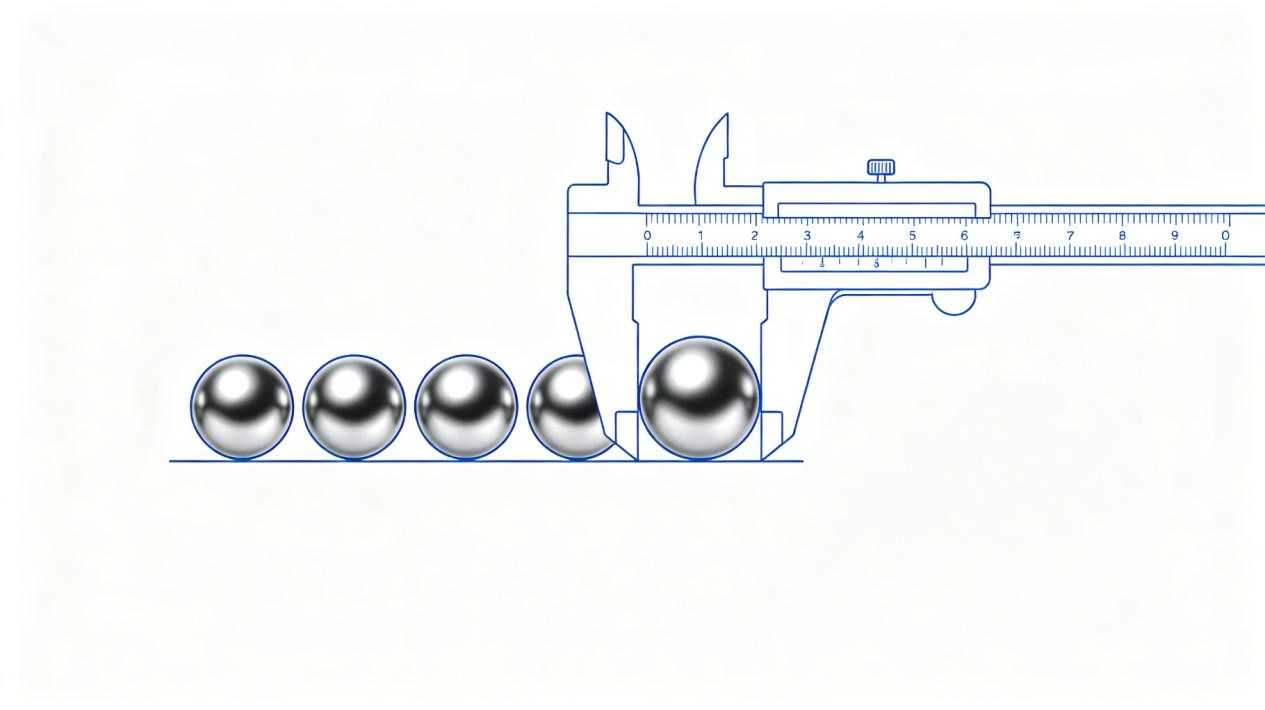
Caliper measuring precision balls for diameter tolerance inspection

구면 정밀도 기준 및 주요 지표 안내

Behind a single millimeter-sized ball lies an entire system of micron-level precision. Introduction In valve seals, VCM motors, precision bearings, and inspection fixtures, tiny precision balls — bearing steel balls, ceramic balls, cemented carbide (tungsten carbide) balls — are critical components that are easy to overlook. When selecting balls, engineers and buyers often get lost in grade designations such as G3, G5, and G10. If a drawing says “G5,” is that the same ball under the Chinese national standard, the U.S. ABMA, ISO, German DIN, and Japanese JIS? And what do all those symbols — Vdws, ΔSph, Vdwl — actually mean on the shop floor? This article skips the theory and answers three things: how the five major standards relate to each other, how to read the five core metrics, and where buyers most often go wrong. 01 Five major standards: one ball, five sets of rules Five precision systems are most commonly referenced in the industry: Standard Full name Where it is typically used GB/T 308.1 Chinese National Standard — rolling bearing balls General standard for bearing steel balls in China; cemented carbide balls refer to JB/T 9145 ABMA 10A American Bearing Manufacturers Association North American equipment, imported valves, foreign-invested projects ISO 3290 International Organization for Standardization The global baseline; most national standards are modeled on it DIN 5401 German Institute for Standardization (DIN) European precision equipment and German-made machinery JIS B 1501 Japanese Industrial Standard Japanese equipment, and spares for Japanese/Korean production lines Important note: identical grade designations do not mean unconditional interchangeability. Although G3/G5/G10 carry the same numbers across standards, the test criteria, measurement conditions, and sorting rules behind them differ in detail. For export projects, confirm the original standard your customer cites; for domestic substitution projects, select against GB/T 308 together with the actual operating conditions. Grade comparison: the smaller the number after “G”, the tighter the tolerance ISO 3290 is the international baseline, and China’s GB/T 308.1 is substantially equivalent to it. DIN 5401 aligns with the ISO grades, and the JIS B 1501 grade sequence is essentially the same. ABMA 10A was originally written in imperial units, which is why you often see an “A” suffix (G5A, G10A). In plain terms: the smaller the number after the “G”, the smaller the permitted error, and the better the ball’s roundness and dimensional consistency. GB/T 308.1 ISO 3290 DIN 5401 JIS B 1501 ABMA 10A G3 G3 G3 G3 G3 G5 G5 G5 G5 G5A G10 G10 G10 G10 G10A G16 G16 G16 G16 G16A G20 G20 G20 G20 G20A The grade sequences line up, but the actual tolerance limits are governed by the text of each individual standard. 02 Five core metrics: what each symbol actually means Five key metrics, one for each dimension of ball quality. Ball diameter variation (Vdws) — is the ball the same diameter in every direction? In plain terms: measure one ball’s diameter in different directions; Vdws is the difference between the largest and smallest reading. If this value runs high, the ball is effectively a flattened ellipsoid. At high speed that shows up as runout, vibration, and noise. In sealing applications, an ellipsoidal ball cannot form a complete circular sealing line against the seat, which leads directly to leakage. Deviation from spherical form (ΔSph) — how far from a perfect sphere? In plain terms: how far the ball’s outer surface deviates from a mathematically perfect sphere. In a perfect sphere, every point on the surface is the same distance from the center. The larger ΔSph is, the more likely the surface has local high or low spots. Under load, those spots concentrate stress and are prone to denting; at a sealing face, point contact causes seal failure. Where cemented carbide balls run against valve seats, ΔSph is the metric that matters most. Lot diameter variation (Vdwl) — how uniform is the batch? In plain terms: within one delivered lot, the size difference between the largest and the smallest ball. Perfect roundness on a single ball is not enough — every ball in the lot needs to be as close in size as possible. In multi-ball drives, caged bearings, counterweights, and multi-ball positioning, a lot with scattered sizes means uneven loading, jamming, and wobble. Many customers check only single-ball specifications and ignore lot consistency — and that is usually where assembly problems come from later. Surface roughness (Ra) — how smooth is the surface, microscopically? In plain terms: the degree of micro-level unevenness on the ball surface. The lower the Ra value, the smoother the surface. Under high-speed friction, rough surfaces generate heat and wear faster. In precision sealing, even a tiny high spot or scratch becomes a leak path for the medium. After fine grinding, cemented carbide balls can reach Ra 0.01 μm for demanding sealing applications. Nominal diameter deviation — how far from the drawing’s nominal size? In plain terms: how much the actual ball size is allowed to differ from the nominal dimension on the drawing. If the drawing calls for φ3 mm, how many microns plus or minus are permitted? Many engineers look only at the G5 grade and ignore the nominal diameter tolerance band. The grade is a baseline; a drawing can always tighten tolerances further. Two G5 orders can therefore carry quite different dimensional limits. 03 Selection pitfalls: three practical rules Don’t order by grade alone A purchasing specification should not say only “G5 cemented carbide balls”. Write down: the standard and its version (for example GB/T 308.1-2013), the nominal diameter, the limits for the five metrics above, and the surface quality requirement. The more complete the specification, the smaller the surprise on delivery. Replacing an imported part with a domestic ball? Verify the limits first If the original equipment drawing cites ABMA, check that the limits for deviation from spherical form, surface roughness, and lot diameter variation are consistent before you substitute a GB/T G5 ball. Confirm the metrics are equivalent first — otherwise you can end up with vibration or seal leakage after
Read More
cemented carbide balls tungsten steel banner

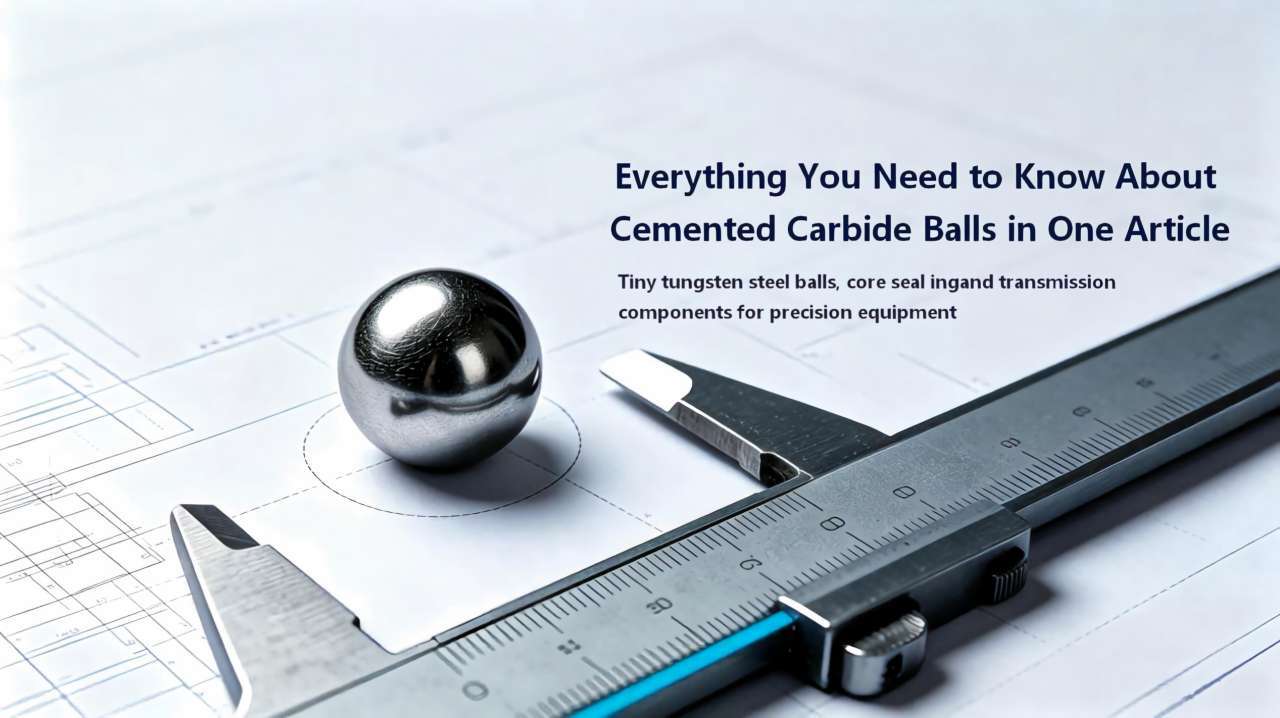
세멘티드 카바이드 볼에 대해 한 편의 글로 알아야 할 모든 것

In the field of precision manufacturing, industry attention often focuses on large-scale equipment and complex structural components, making it all too easy to overlook small, basic components. Although cemented carbide balls (commonly known as tungsten steel balls) are unassuming miniature components, they directly determine the sealing precision, transmission stability, and overall service life of precision equipment, making them core industrial components essential for the long-term, stable operation of high-end machinery. At JNE New Material, we manufacture YG and YN series cemented carbide balls in diameters from 0.5 mm to 50 mm, with custom grades and sizes available on request. What Are Cemented Carbide Balls? Cemented carbide balls are high-precision spherical components manufactured using advanced powder metallurgy technology, with tungsten carbide as the hard matrix and cobalt or nickel as the binder phase. The industry primarily categorizes them into two main series: the YG series (tungsten-cobalt alloy) and the YN series (non-magnetic tungsten-nickel alloy). Compared to ordinary steel balls and bearing steel balls, the performance of both series of cemented carbide balls has been comprehensively upgraded. They address the pain points of traditional balls—such as susceptibility to wear, deformation, and corrosion, as well as poor precision—and can be specifically tailored to meet the precision manufacturing needs of different strengths, media, and operating conditions. They are currently the core foundational components in industrial precision manufacturing. Core Physical and Chemical Properties The outstanding adaptability of cemented carbide balls to various operating conditions stems from their stable and superior physical and chemical properties. At the same time, the YG and YN series exhibit significant differences in their properties due to variations in the binder phase material; this is the fundamental reason why these two product lines are suited for different operating conditions. Physical and Chemical Properties of Major Grades ① Physical Properties (by Grade): Property YG3X YG6 YG6X YG8 YG8N YG13 YN6 YN9 YN10 Test Condition Main Composition WC 97% Co 3% WC 94% Co 6% WC 94% Co 6% WC 92% Co 8% WC 91% Co 8% TaC 1% WC 87% Co 13% WC 94% Ni 6% WC 91% Ni 9% WC 90% Ni 10% Material specification Density (g/cm³) 15.0–15.3 14.7–15.0 14.7–15.0 14.5–14.9 14.8–14.9 14.0–14.4 14.5–14.9 14.2–14.6 14.0–14.4 Room temperature (23°C) Rockwell Hardness (HRA) 92–93.5 89.5–91 90–91.5 89–89.5 89.5–91.5 86–88 89–91 89–90 87–89 Room temperature (23°C) Flexural Strength (MPa) 1300–1800 1450–1600 1350–1700 1800–2300 1500–2000 2400–2800 1400–1800 1600–2000 1600–2200 Room temperature (23°C) Fracture Toughness (MPa·m1/2) 10–12 13–14 12–14 14–16 13–15 16–18 12–14 13–15 14–16 Room temperature (23°C) Temperature Resistance (°C) 400–500 400–500 400–500 400–500 400–500 400–500 400–500 400–500 400–500 23–1000°C Wear Resistance (Volumetric Wear Rate, mm³/(N·m)) ≤ 0.005 ≤ 0.008 ≤ 0.007 ≤ 0.01 ≤ 0.009 ≤ 0.02 ≤ 0.01 ≤ 0.015 ≤ 0.02 Dry sliding wear, room temperature Magnetic Properties Magnetic Magnetic Magnetic Magnetic Magnetic Magnetic Non-magnetic Non-magnetic Non-magnetic — ② Chemical Properties (by Grade): Property YG3X YG6 YG6X YG8 YG8N YG13 YN6 YN9 YN10 Test Condition Acid Resistance (Mass Loss Rate, %) < 0.1 < 0.1 < 0.1 < 0.1 < 0.1 < 0.1 < 0.1 < 0.1 < 0.1 Room temperature, 24 h, 10% hydrochloric acid Alkali Resistance (Mass Loss Rate, %) < 0.5 < 0.5 < 0.5 < 0.5 < 0.5 < 0.5 < 0.5 < 0.5 < 0.5 Room temperature, 24 h, 5% sodium hydroxide Resistance to Organic Solvents (Mass Loss Rate, %) < 0.05 < 0.05 < 0.05 < 0.05 < 0.05 < 0.05 < 0.05 < 0.05 < 0.05 72 h at room temperature, in ethanol/acetone High-Temp Oxidation Resistance (Mass Change Rate, %) < 0.2 < 0.2 < 0.2 < 0.2 < 0.2 < 0.2 < 0.2 < 0.2 < 0.2 1000°C, 100 h, in air High-Temp Acid & Alkali Corrosion Resistance (Mass Loss Rate, %) < 0.5 < 0.5 < 0.5 < 0.5 < 0.5 < 0.5 < 0.5 < 0.5 < 0.5 800°C/24 h, 20% sulfuric acid, 5% sodium hydroxide Thermal Shock Resistance (°C) 200–300 200–300 200–300 200–300 200–300 200–300 200–300 200–300 200–300 Rapid heating/cooling, no cracking Note: Data in this table is compiled from published material property tables of major cemented carbide grades and is provided for reference and comparison purposes. Exact values may vary by batch and manufacturing process — contact us for datasheets of specific grades. Full parameter table (including corrosion resistance, thermal conductivity, wear resistance and creep data for each grade): Precision Manufacturing Process The high precision and stability of cemented carbide balls rely not only on high-quality base materials but also on a standardized, meticulous powder metallurgy manufacturing process. Each step is subject to strict control to ensure consistent product quality. Precise Powder Blending: Formulations are tailored to each product series. The YG series uses a tungsten carbide + cobalt-based binder formulation, while the YN series employs a tungsten carbide + nickel-based binder formulation without added cobalt. For certain grades, trace amounts of TiN are added to refine grain size and enhance corrosion resistance. Thorough mixing via wet ball milling ensures uniform powder particle size and composition, establishing the performance differences between the two product lines at the source. Electronics and Digital Industry (YN Series): The YN series is non-magnetic, high-precision, and ultra-clean, free from magnetic interference. It is widely used in VCM (voice coil motors) and precision optical components, performing critical precision transmission functions such as lens autofocus and optical image stabilization. Precision Testing Instruments (YN Series): The YN series features stable material properties, is non-magnetic and corrosion-resistant, and exhibits minimal measurement error. It can be used as indenters for hardness testers, standard calibration spheres, and precision testing fixtures. General Industrial Applications (YG Series): The YG series offers excellent value for money and is wear-resistant and durable. It is widely used in precision bearings, pump seals, mechanical counterweights, sandblasting and grinding, and automated transmission equipment. Selection Guide: YG or YN? For general wear resistance, high-pressure sealing, mechanical counterweights, and general industrial applications, prioritize the YG series, which offers a balance of performance and cost-effectiveness. For non-magnetic environments, precision electronics, optical inspection, chemical corrosion, and high-cleanliness conditions, the YN series must be selected to avoid magnetic interference

Read More
products we offer

당사 제공 제품

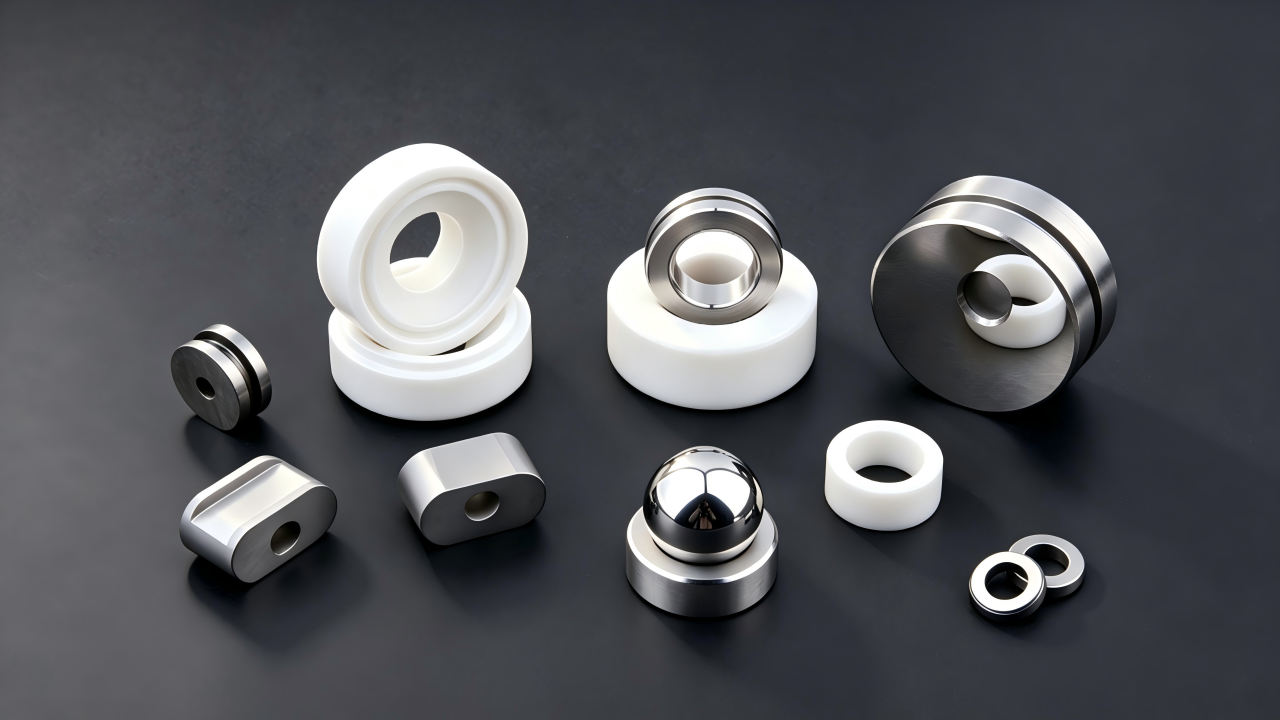
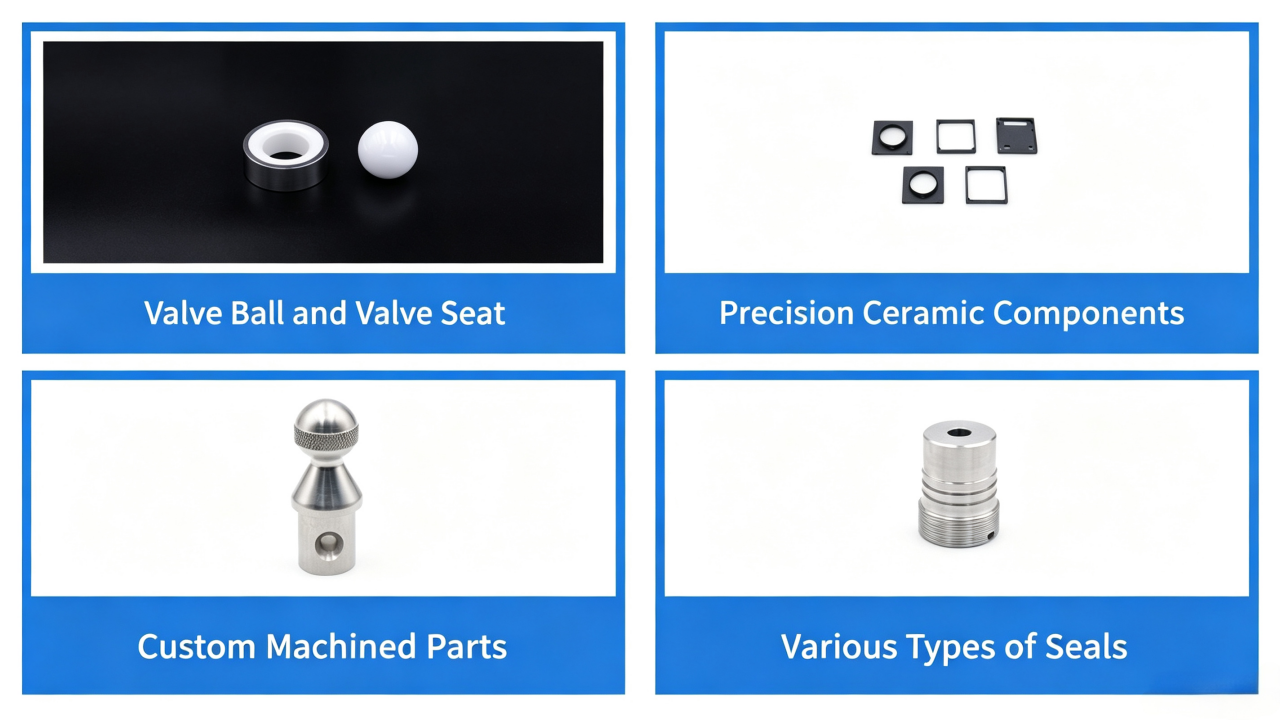
주요 제품 카테고리 고정밀 구형 부품, 베어링 및 베어링 어셈블리, 밸브 볼 및 시트, 맞춤형 정밀 이형 부품 가공 가능 및 적용 가능한 재료 세라믹스(지르코니아, 알루미나, 질화규소, 탄화규소 등), 초경합금(YG3X, YG6, YG6X, YG8, YG8N, YG13, YN6, YN9, YN10 등), 모넬 합금(MONEL K400, MONEL K450, MONEL K500 등), 스테인리스강(304, 316, 316L, 410, 420, 440C 등), 인코넬 합금(Inconel 600, Inconel 601, Inconel 625, Inconel 718 등), 스텔라이트 합금(Stellite 6B, Stellite 1, Stellite 4, STELLITE 8, STELLITE 12, STELLITE 20 등), 순금속(알루미늄, 구리, 철 등), 기타 금속(베어링용 강철 CGr15, 티타늄 합금 TC4, Hastelloy C276 등), 플라스틱(POM, PP, PA, BB, PEEK, PTFE 등), 유리(광학유리 등)

Read More
comparison of performance and applications of four major ceramic ball materials

주요 세라믹 볼 재료 네 가지의 성능 및 응용 비교: 지르코니아 / 알루미나 / 탄화규소 / 질화규소 세라믹 볼

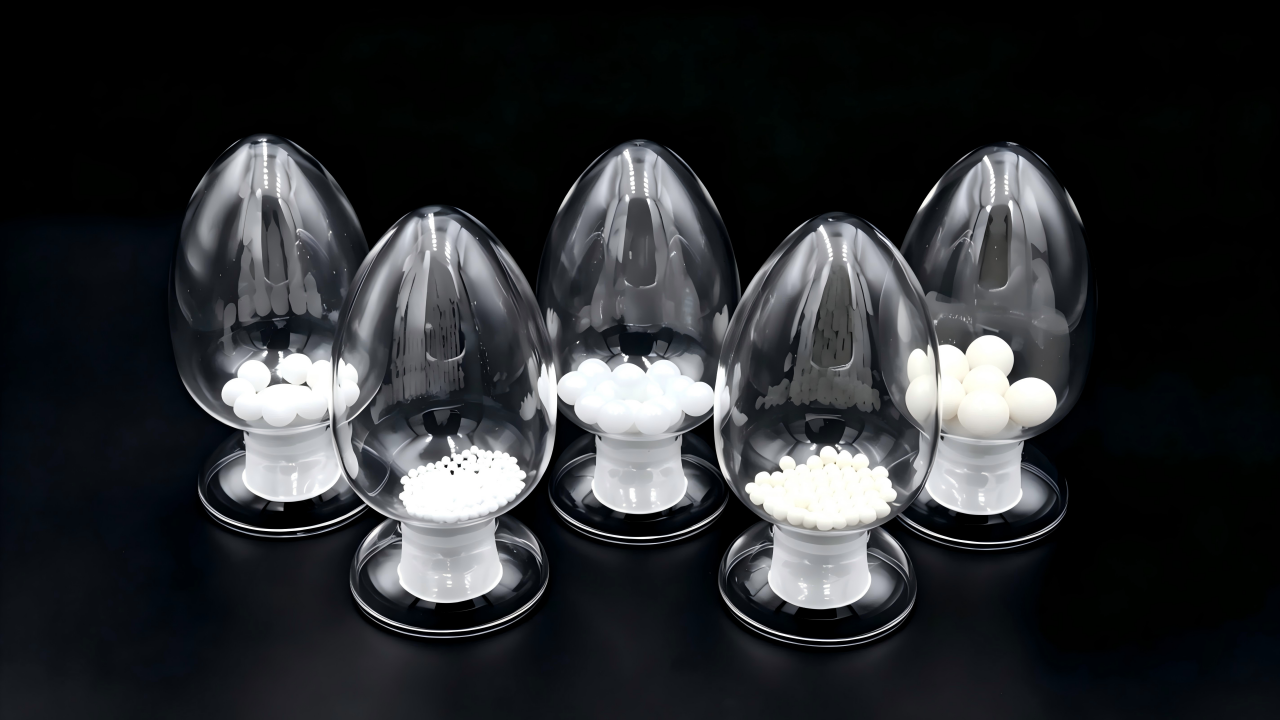
세라믹 볼은 정밀 베어링, 의료기기, 항공우주, 자동차 및 고온 내식 설비 등에 널리 사용됩니다. 서로 다른 재료로 제작된 세라믹 볼은 경도, 밀도, 내온성, 내식성 등 핵심 특성에서 큰 차이를 보입니다. 아래는 주류 세라믹 볼 4종의 주요 파라미터를 비교한 표로, 제품 선택에 도움을 드립니다.   파라미터 지르코니아 세라믹 볼 알루미나 세라믹 볼 탄화규소 세라믹 볼 질화규소 세라믹 볼 제품 이미지 외관 유백색/베이지색 고광택으로 매끄러운 표면 매우 높은 표면 마감 순백색   단단한 질감   깔끔하고 균일한 외관 검회색   무광 처리   치밀하고 견고한 조직 회흑색 매끈한   무광 처리   정밀 연마로 거스러짐 없음   밀도(g/cm³) 6.05 3.9 3.2 3.25 록웰 경도(HRA) 89-90 88-89 92-93 91-92 고온 내성(°C) 1000°C 1200°C 1600°C 1300°C 압축강도(MPa) 2000 1800 2200 2100 내식성 산·알칼리에 내성 내식성   우수한 내노화성 약산·약알칼리에도 내성   강산·강알칼리 환경에서는 주의하여 사용해야 함 매우 높은 내식성   강산·강알칼리에도 내성   용제에 의한 침식에도 저항 우수한 내식성   각종 가혹한 화학 환경에서도 적합   절연 특성 높은 절연성   비전도성   정전기 방지 초고절연성   안정적인 전기적 성능 반절연성   약한 전기 전도성 높은 절연성   전기 누설 없는 고온 내성   주요 특징 우수한 인성   깨짐과 균열에 강함   높은 표면 마감   내마모성과 저소음   고정밀도 높은 가성비   충분한 경도   좋은 절연성   고온 및 산화 저항   균일한 조직   매우 다목적 초경질·초내마모성   초고온 내성   우수한 내식성   낮은 마찰계수   고온·고압에도 견딤   매우 긴 수명 높은 인성   열충격 저항   고온과 저온의 교차 변화에 대한 내성   마모와 피로에 대한 내성   경량   고속 운전 시 열 축적과 손상에 강함 주요 적용 산업 정밀 베어링   의료기기   식품 가공 기계   밸브 및 밸브 코어   전자 장비   정밀 계측기   고속 변속 부품 화학 포장   연삭 및 연마   하드웨어 부품   씰   표준 베어링   가전 부품   수처리 설비 고온 설비   화학 내식 설비   항공우주   야금 기계   고압 내마모성   극한 작동 조건용 부품 고속 정밀 베어링   풍력 발전 설비   자동차 정밀 부품   항공우주   고온 동력 설비   자세한 사항은 고객센터로 문의해 주시기 바랍니다.   맞춤형 정밀 세라믹 볼이 필요하시다면, 요구되는 치수, 공차 및 사용 조건을 알려주시기 바랍니다. 당사 기술팀이 귀하에게 최적화된 맞춤 솔루션을 제공해 드립니다. 무료 견적을 받으시려면 도면과 규격을 보내 주시기 바랍니다.

Read More
about jne

JNE 소개

2016년에 설립되어 저장성 자싱시에 본사를 둔 JNE 신소재 유한회사는 고급 신소재의 연구개발, 스마트 제조 및 산업화를 전문으로 하는 국가급 하이테크 기업입니다. 이 회사는 고정밀 구체, 초정밀 베어링 부품, 고정밀 볼 밸브 시트 및 다양한 비정형 맞춤형 정밀 부품을 전문적으로 생산합니다. 제품에는 지르코니아, 질화규소, 탄화규소, 알루미나, 초경합금, 비자성 합금, 고밀도 합금, 스테인리스강, 사파이어, 플라스틱, 유리 등 다양한 고품질 원자재가 사용됩니다. 제품군은 첨단 세라믹, 초경합금, 특수용도 합금, 정밀 금속 및 플라스틱 등 전 범위에 걸쳐 포괄적입니다. 종합적인 규격과 뛰어난 정밀성을 갖춘 당사 제품은 각종 고급 응용 분야에서 요구되는 엄격한 운영 기준을 충족합니다. 관리 측면에서는 표준화되고 체계화된 정교한 운영 모델을 준수하며, 명확한 내부 조직 구조와 건전한 관리 시스템을 갖추고 있습니다. ISO 9001:2015 품질경영시스템, ISO 14001:2015 환경경영시스템, ISO 45001:2018 직업건강안전경영시스템 인증을 획득했습니다. 기술적으로는 혁신 주도형 발전 전략을 일관되게 추구하며, 독자적 핵심기술의 연구개발과 지식재산권의 전략적 보호를 매우 중시합니다. 현재까지 총 35건의 독점 특허를 취득했으며, 이중 발명특허 10건과 실용신안특허 25건을 포함합니다. 광범위한 특허 기술 포트폴리오를 바탕으로 견고한 핵심 기술 경쟁력을 확보하고, 지속적으로 제품의 고정밀화, 고성능화 및 고부가가치화를 추진함으로써 업계 선도적 지위를 안정적으로 공고히 하고 있습니다. 생산 측면에서는 3,000㎡ 이상 규모의 최첨단 현대식 생산시설을 운영하고 있습니다. 표준화된 클린룸, 첨단 지능형 가공설비 및 고정밀 물리·화학 시험 장비를 완비한 이 시설은 대량생산 능력과 유연한 맞춤형 R&D 역량을 결합하여 충분한 생산 용량과 정시 납품을 보장합니다. 동시에 원스톱 종합 서비스 체계를 구축하여 솔루션 설계, 시제품 개발, 양산, 기술 통합 및 사후 지원에 이르기까지 고객 맞춤형 서비스를 제공함으로써 각 고객의 개별화된 맞춤 요구를 유연하게 충족합니다. 제품 측면에서는 항공우주, 고급 의료 정밀기기, 반도체 유체 장비, 신에너지 설비, 5G 통신, 고급 유압·공압 장비, 정밀 계측기 및 미터, 산업용 유체 밸브, 스마트 자동화 설비 등 수많은 첨단 및 최첨단 산업 분야에서 폭넓게 활용되고 있습니다. 우수한 명성 덕분에 다수의 업계 고객으로부터 깊은 신뢰를 얻고 있으며, 판매망은 전국을 아우르고 국내외 시장으로 제품을 수출하고 있습니다. JNE의 모든 구성원은 “탁월한 품질, 헌신적 노력, 뛰어난 우수성”이라는 회사의 핵심 문화 가치를 변함없이 지켜오고 있습니다. 우리는 창립 이념인 장인정신, 성실성, 실용적 발전을 준수하며, 엄격한 기준에 따라 프리미엄 제품을 완성하고 진정성 있는 서비스로 충성도 높은 고객층을 형성해 왔습니다. 앞으로도 당사는 연구개발 투자를 지속적으로 확대하고, 기술 혁신과 산업 고도화에 집중하며, 고급 정밀 신소재의 스마트 제조 분야에서 국내 최고 수준의 브랜드를 구축하기 위해 더욱 노력할 것입니다. 모든 분야의 파트너 여러분께 진심으로 초대드리며, 함께 힘을 모아 협력의 새로운 미래를 열어가는 동시에 업계의 새로운 기회를 공동으로 모색해 나가기를 기대합니다.

Read More