Blog

  1. Startseite
  2. / Blog
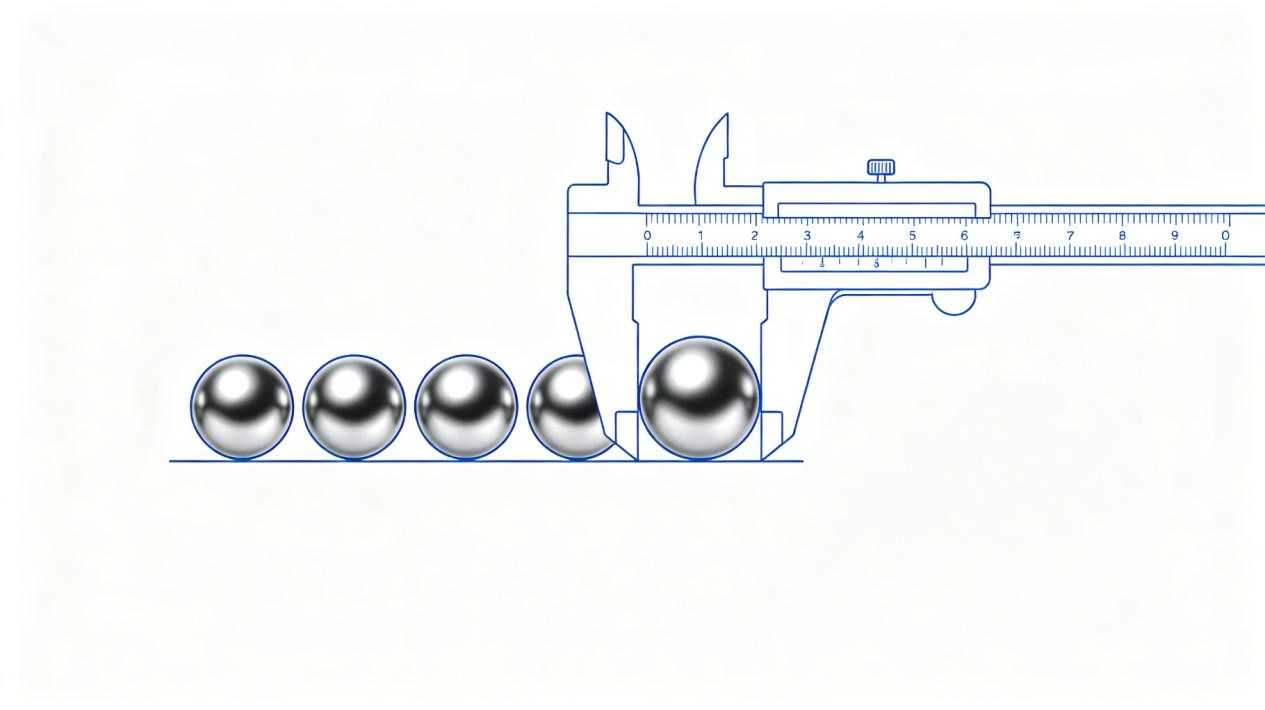
Caliper measuring precision balls for diameter tolerance inspection

Ein Leitfaden zu sphärischen Präzisionsstandards und Schlüsselmetriken

Behind a single millimeter-sized ball lies an entire system of micron-level precision. Introduction In valve seals, VCM motors, precision bearings, and inspection fixtures, tiny precision balls — bearing steel balls, ceramic balls, cemented carbide (tungsten carbide) balls — are critical components that are easy to overlook. When selecting balls, engineers and buyers often get lost in grade designations such as G3, G5, and G10. If a drawing says “G5,” is that the same ball under the Chinese national standard, the U.S. ABMA, ISO, German DIN, and Japanese JIS? And what do all those symbols — Vdws, ΔSph, Vdwl — actually mean on the shop floor? This article skips the theory and answers three things: how the five major standards relate to each other, how to read the five core metrics, and where buyers most often go wrong. 01 Five major standards: one ball, five sets of rules Five precision systems are most commonly referenced in the industry: Standard Full name Where it is typically used GB/T 308.1 Chinese National Standard — rolling bearing balls General standard for bearing steel balls in China; cemented carbide balls refer to JB/T 9145 ABMA 10A American Bearing Manufacturers Association North American equipment, imported valves, foreign-invested projects ISO 3290 International Organization for Standardization The global baseline; most national standards are modeled on it DIN 5401 German Institute for Standardization (DIN) European precision equipment and German-made machinery JIS B 1501 Japanese Industrial Standard Japanese equipment, and spares for Japanese/Korean production lines Important note: identical grade designations do not mean unconditional interchangeability. Although G3/G5/G10 carry the same numbers across standards, the test criteria, measurement conditions, and sorting rules behind them differ in detail. For export projects, confirm the original standard your customer cites; for domestic substitution projects, select against GB/T 308 together with the actual operating conditions. Grade comparison: the smaller the number after “G”, the tighter the tolerance ISO 3290 is the international baseline, and China’s GB/T 308.1 is substantially equivalent to it. DIN 5401 aligns with the ISO grades, and the JIS B 1501 grade sequence is essentially the same. ABMA 10A was originally written in imperial units, which is why you often see an “A” suffix (G5A, G10A). In plain terms: the smaller the number after the “G”, the smaller the permitted error, and the better the ball’s roundness and dimensional consistency. GB/T 308.1 ISO 3290 DIN 5401 JIS B 1501 ABMA 10A G3 G3 G3 G3 G3 G5 G5 G5 G5 G5A G10 G10 G10 G10 G10A G16 G16 G16 G16 G16A G20 G20 G20 G20 G20A The grade sequences line up, but the actual tolerance limits are governed by the text of each individual standard. 02 Five core metrics: what each symbol actually means Five key metrics, one for each dimension of ball quality. Ball diameter variation (Vdws) — is the ball the same diameter in every direction? In plain terms: measure one ball’s diameter in different directions; Vdws is the difference between the largest and smallest reading. If this value runs high, the ball is effectively a flattened ellipsoid. At high speed that shows up as runout, vibration, and noise. In sealing applications, an ellipsoidal ball cannot form a complete circular sealing line against the seat, which leads directly to leakage. Deviation from spherical form (ΔSph) — how far from a perfect sphere? In plain terms: how far the ball’s outer surface deviates from a mathematically perfect sphere. In a perfect sphere, every point on the surface is the same distance from the center. The larger ΔSph is, the more likely the surface has local high or low spots. Under load, those spots concentrate stress and are prone to denting; at a sealing face, point contact causes seal failure. Where cemented carbide balls run against valve seats, ΔSph is the metric that matters most. Lot diameter variation (Vdwl) — how uniform is the batch? In plain terms: within one delivered lot, the size difference between the largest and the smallest ball. Perfect roundness on a single ball is not enough — every ball in the lot needs to be as close in size as possible. In multi-ball drives, caged bearings, counterweights, and multi-ball positioning, a lot with scattered sizes means uneven loading, jamming, and wobble. Many customers check only single-ball specifications and ignore lot consistency — and that is usually where assembly problems come from later. Surface roughness (Ra) — how smooth is the surface, microscopically? In plain terms: the degree of micro-level unevenness on the ball surface. The lower the Ra value, the smoother the surface. Under high-speed friction, rough surfaces generate heat and wear faster. In precision sealing, even a tiny high spot or scratch becomes a leak path for the medium. After fine grinding, cemented carbide balls can reach Ra 0.01 μm for demanding sealing applications. Nominal diameter deviation — how far from the drawing’s nominal size? In plain terms: how much the actual ball size is allowed to differ from the nominal dimension on the drawing. If the drawing calls for φ3 mm, how many microns plus or minus are permitted? Many engineers look only at the G5 grade and ignore the nominal diameter tolerance band. The grade is a baseline; a drawing can always tighten tolerances further. Two G5 orders can therefore carry quite different dimensional limits. 03 Selection pitfalls: three practical rules Don’t order by grade alone A purchasing specification should not say only “G5 cemented carbide balls”. Write down: the standard and its version (for example GB/T 308.1-2013), the nominal diameter, the limits for the five metrics above, and the surface quality requirement. The more complete the specification, the smaller the surprise on delivery. Replacing an imported part with a domestic ball? Verify the limits first If the original equipment drawing cites ABMA, check that the limits for deviation from spherical form, surface roughness, and lot diameter variation are consistent before you substitute a GB/T G5 ball. Confirm the metrics are equivalent first — otherwise you can end up with vibration or seal leakage after
Read More
cemented carbide balls tungsten steel banner

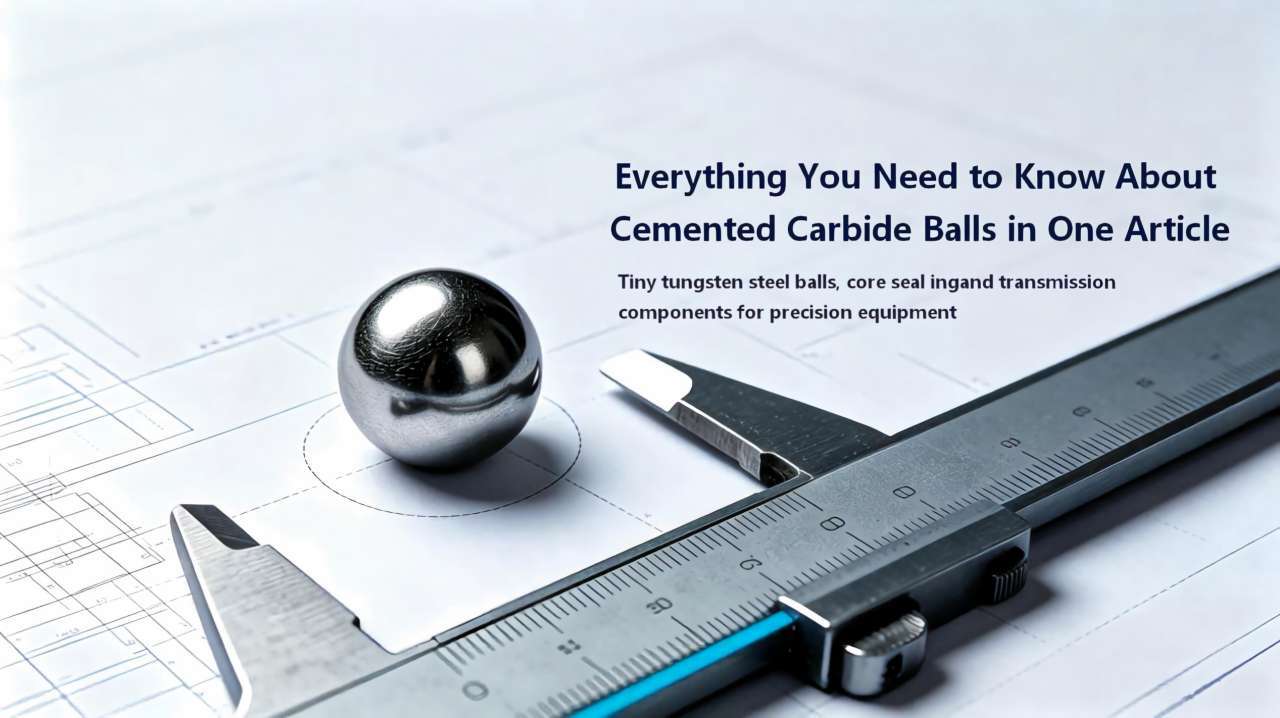
Alles, was Sie über Hartmetallkugeln in einem einzigen Artikel wissen müssen

In the field of precision manufacturing, industry attention often focuses on large-scale equipment and complex structural components, making it all too easy to overlook small, basic components. Although cemented carbide balls (commonly known as tungsten steel balls) are unassuming miniature components, they directly determine the sealing precision, transmission stability, and overall service life of precision equipment, making them core industrial components essential for the long-term, stable operation of high-end machinery. At JNE New Material, we manufacture YG and YN series cemented carbide balls in diameters from 0.5 mm to 50 mm, with custom grades and sizes available on request. What Are Cemented Carbide Balls? Cemented carbide balls are high-precision spherical components manufactured using advanced powder metallurgy technology, with tungsten carbide as the hard matrix and cobalt or nickel as the binder phase. The industry primarily categorizes them into two main series: the YG series (tungsten-cobalt alloy) and the YN series (non-magnetic tungsten-nickel alloy). Compared to ordinary steel balls and bearing steel balls, the performance of both series of cemented carbide balls has been comprehensively upgraded. They address the pain points of traditional balls—such as susceptibility to wear, deformation, and corrosion, as well as poor precision—and can be specifically tailored to meet the precision manufacturing needs of different strengths, media, and operating conditions. They are currently the core foundational components in industrial precision manufacturing. Core Physical and Chemical Properties The outstanding adaptability of cemented carbide balls to various operating conditions stems from their stable and superior physical and chemical properties. At the same time, the YG and YN series exhibit significant differences in their properties due to variations in the binder phase material; this is the fundamental reason why these two product lines are suited for different operating conditions. Physical and Chemical Properties of Major Grades ① Physical Properties (by Grade): Property YG3X YG6 YG6X YG8 YG8N YG13 YN6 YN9 YN10 Test Condition Main Composition WC 97% Co 3% WC 94% Co 6% WC 94% Co 6% WC 92% Co 8% WC 91% Co 8% TaC 1% WC 87% Co 13% WC 94% Ni 6% WC 91% Ni 9% WC 90% Ni 10% Material specification Density (g/cm³) 15.0–15.3 14.7–15.0 14.7–15.0 14.5–14.9 14.8–14.9 14.0–14.4 14.5–14.9 14.2–14.6 14.0–14.4 Room temperature (23°C) Rockwell Hardness (HRA) 92–93.5 89.5–91 90–91.5 89–89.5 89.5–91.5 86–88 89–91 89–90 87–89 Room temperature (23°C) Flexural Strength (MPa) 1300–1800 1450–1600 1350–1700 1800–2300 1500–2000 2400–2800 1400–1800 1600–2000 1600–2200 Room temperature (23°C) Fracture Toughness (MPa·m1/2) 10–12 13–14 12–14 14–16 13–15 16–18 12–14 13–15 14–16 Room temperature (23°C) Temperature Resistance (°C) 400–500 400–500 400–500 400–500 400–500 400–500 400–500 400–500 400–500 23–1000°C Wear Resistance (Volumetric Wear Rate, mm³/(N·m)) ≤ 0.005 ≤ 0.008 ≤ 0.007 ≤ 0.01 ≤ 0.009 ≤ 0.02 ≤ 0.01 ≤ 0.015 ≤ 0.02 Dry sliding wear, room temperature Magnetic Properties Magnetic Magnetic Magnetic Magnetic Magnetic Magnetic Non-magnetic Non-magnetic Non-magnetic — ② Chemical Properties (by Grade): Property YG3X YG6 YG6X YG8 YG8N YG13 YN6 YN9 YN10 Test Condition Acid Resistance (Mass Loss Rate, %) < 0.1 < 0.1 < 0.1 < 0.1 < 0.1 < 0.1 < 0.1 < 0.1 < 0.1 Room temperature, 24 h, 10% hydrochloric acid Alkali Resistance (Mass Loss Rate, %) < 0.5 < 0.5 < 0.5 < 0.5 < 0.5 < 0.5 < 0.5 < 0.5 < 0.5 Room temperature, 24 h, 5% sodium hydroxide Resistance to Organic Solvents (Mass Loss Rate, %) < 0.05 < 0.05 < 0.05 < 0.05 < 0.05 < 0.05 < 0.05 < 0.05 < 0.05 72 h at room temperature, in ethanol/acetone High-Temp Oxidation Resistance (Mass Change Rate, %) < 0.2 < 0.2 < 0.2 < 0.2 < 0.2 < 0.2 < 0.2 < 0.2 < 0.2 1000°C, 100 h, in air High-Temp Acid & Alkali Corrosion Resistance (Mass Loss Rate, %) < 0.5 < 0.5 < 0.5 < 0.5 < 0.5 < 0.5 < 0.5 < 0.5 < 0.5 800°C/24 h, 20% sulfuric acid, 5% sodium hydroxide Thermal Shock Resistance (°C) 200–300 200–300 200–300 200–300 200–300 200–300 200–300 200–300 200–300 Rapid heating/cooling, no cracking Note: Data in this table is compiled from published material property tables of major cemented carbide grades and is provided for reference and comparison purposes. Exact values may vary by batch and manufacturing process — contact us for datasheets of specific grades. Full parameter table (including corrosion resistance, thermal conductivity, wear resistance and creep data for each grade): Precision Manufacturing Process The high precision and stability of cemented carbide balls rely not only on high-quality base materials but also on a standardized, meticulous powder metallurgy manufacturing process. Each step is subject to strict control to ensure consistent product quality. Precise Powder Blending: Formulations are tailored to each product series. The YG series uses a tungsten carbide + cobalt-based binder formulation, while the YN series employs a tungsten carbide + nickel-based binder formulation without added cobalt. For certain grades, trace amounts of TiN are added to refine grain size and enhance corrosion resistance. Thorough mixing via wet ball milling ensures uniform powder particle size and composition, establishing the performance differences between the two product lines at the source. Electronics and Digital Industry (YN Series): The YN series is non-magnetic, high-precision, and ultra-clean, free from magnetic interference. It is widely used in VCM (voice coil motors) and precision optical components, performing critical precision transmission functions such as lens autofocus and optical image stabilization. Precision Testing Instruments (YN Series): The YN series features stable material properties, is non-magnetic and corrosion-resistant, and exhibits minimal measurement error. It can be used as indenters for hardness testers, standard calibration spheres, and precision testing fixtures. General Industrial Applications (YG Series): The YG series offers excellent value for money and is wear-resistant and durable. It is widely used in precision bearings, pump seals, mechanical counterweights, sandblasting and grinding, and automated transmission equipment. Selection Guide: YG or YN? For general wear resistance, high-pressure sealing, mechanical counterweights, and general industrial applications, prioritize the YG series, which offers a balance of performance and cost-effectiveness. For non-magnetic environments, precision electronics, optical inspection, chemical corrosion, and high-cleanliness conditions, the YN series must be selected to avoid magnetic interference

Read More
products we offer

Unsere angebotenen Produkte

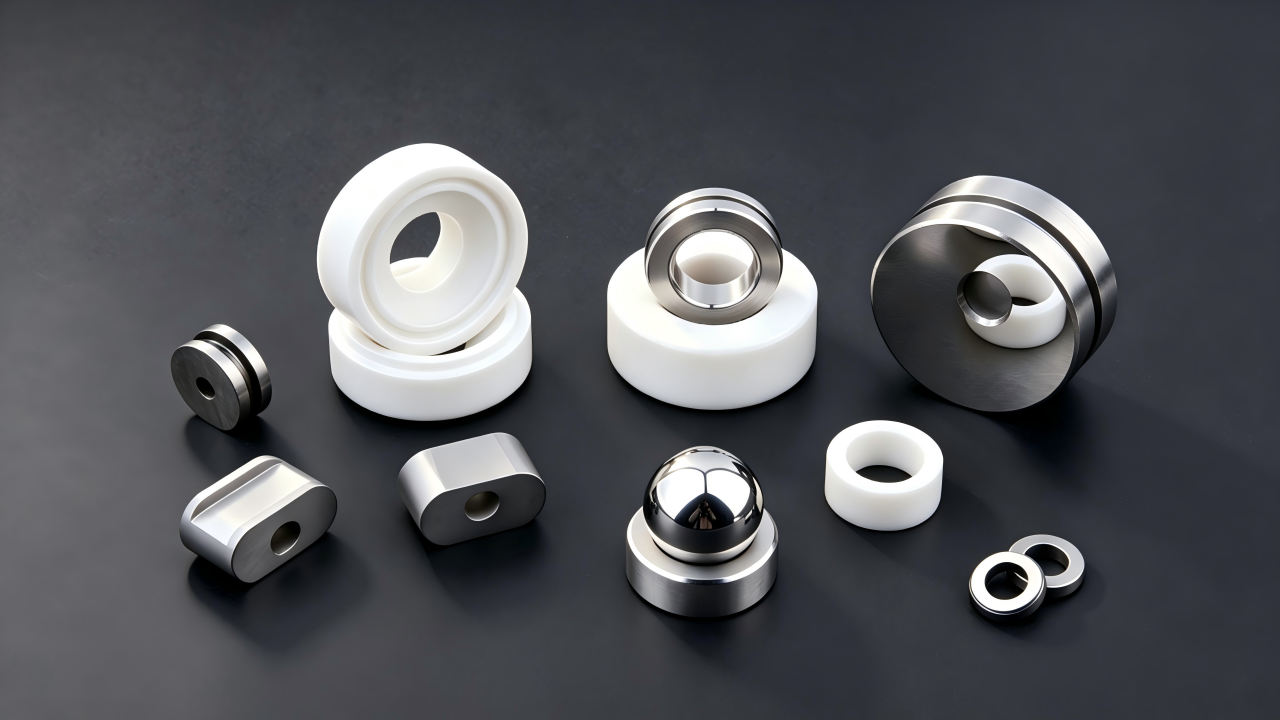
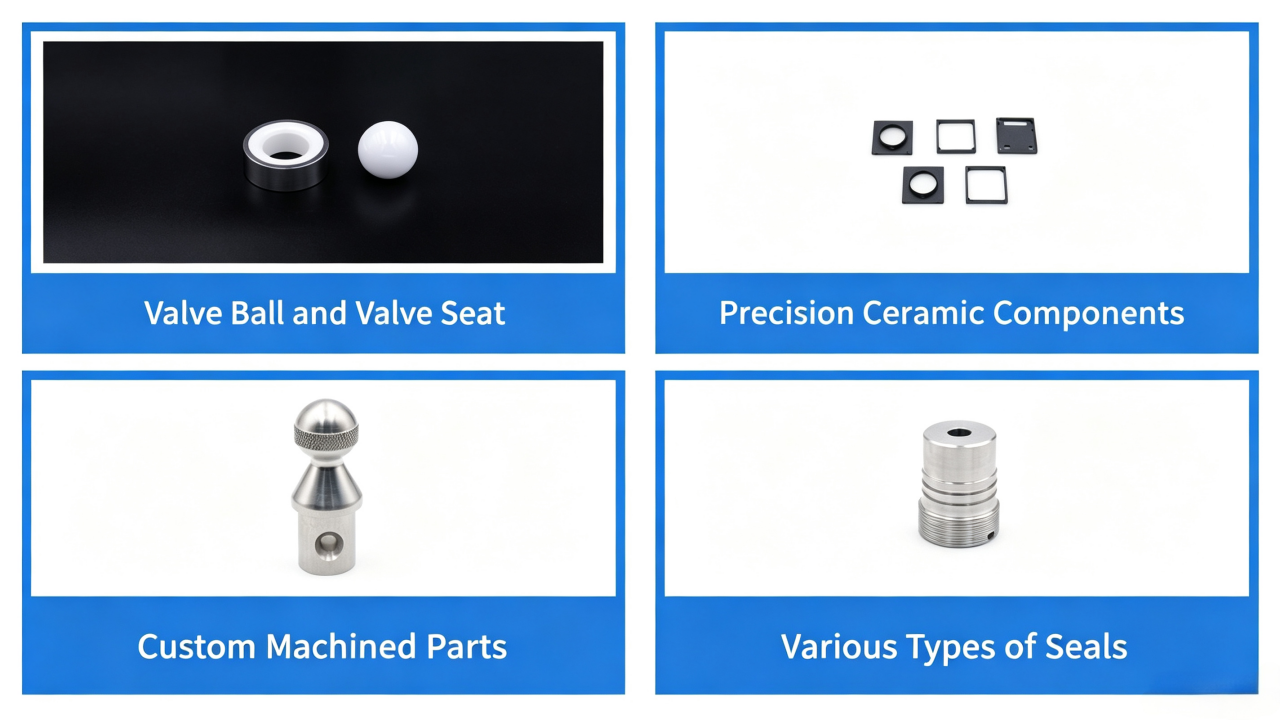
Hauptproduktkategorien Hochpräzise kugelförmige Komponenten, Lager und Lagerbaugruppen, Ventilkugeln und -sitzteile, kundenspezifische Präzisions‑Teile unregelmäßiger Form Bearbeitbare und anwendbare Werkstoffe Keramiken (Zirkonoxid, Aluminiumoxid, Siliziumnitrid, Siliziumkarbid usw.) Hartmetalle (YG3X, YG6, YG6X, YG8, YG8N, YG13, YN6, YN9, YN10 usw.) Monel‑Legierungen (MONEL K400, MONEL K450, MONEL K500 usw.) Edelstahl (304, 316, 316L, 410, 420, 440C usw.) Inconel‑Legierungen (Inconel 600, Inconel 601, Inconel 625, Inconel 718 usw.) Stellite‑Legierungen (Stellite 6B, Stellite 1, Stellite 4, STELLITE 8, STELLITE 12, STELLITE 20 usw.) Reine Metalle (Aluminium, Kupfer, Eisen usw.) Weitere Metalle (Lagerstahl CGr15, Titanlegierung TC4, Hastelloy C276 usw.) Kunststoffe (POM, PP, PA, BB, PEEK, PTFE usw.) Glas (Optikglas usw.)

Read More
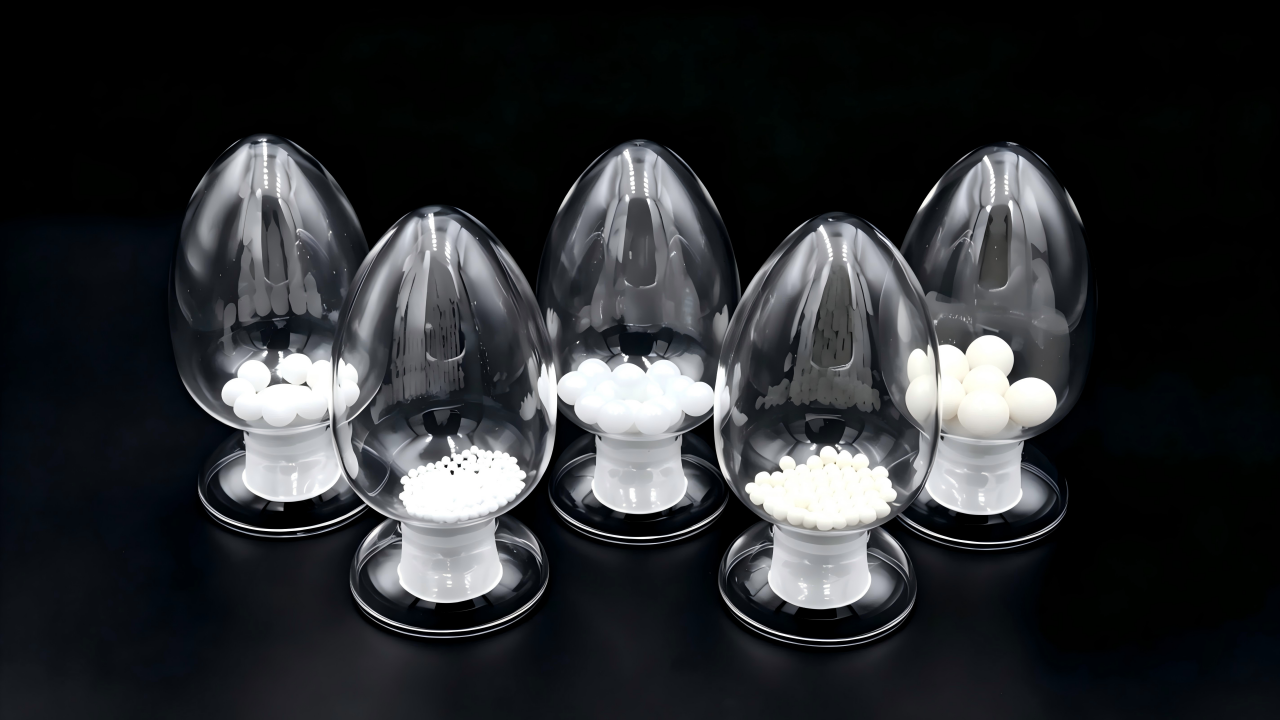
comparison of performance and applications of four major ceramic ball materials

Vergleich der Leistungsmerkmale und Anwendungen von vier wichtigen Keramikkugelmaterialien: Zirkonia-/Aluminiumoxid-/Siliziumkarbid-/Siliziumnitrid-Keramikkugeln

Keramikkugeln werden häufig in Präzisionslagern, medizinischen Geräten, der Luft- und Raumfahrt, der Automobilindustrie sowie in hochtemperaturbeständigen, korrosionsresistenten Anlagen eingesetzt. Keramikkugeln aus unterschiedlichen Materialien weisen erhebliche Unterschiede in grundlegenden Eigenschaften wie Härte, Dichte, Temperaturbeständigkeit und Korrosionsbeständigkeit auf. Nachfolgend finden Sie eine Vergleichstabelle mit den wichtigsten Kennwerten von vier gängigen Keramikkugeltypen, die Ihnen bei der Produktauswahl helfen soll. Parameter Zirkonia‑Keramikkugeln Aluminiumoxid‑Keramikkugeln Siliziumkarbid‑Keramikkugeln Siliziumnitrid‑Keramikkugeln Produktbild Aussehen Milchig‑weiß/beige Hochglänzend, feine Oberfläche Extrem hochwertige Oberflächengüte Reinweiß Hartes Gefüge Ordentliches, gleichmäßiges Erscheinungsbild Schwarzgrau Mattes Finish Dichtes, kompaktes Gefüge Grauschwarz Glatt mattes Finish Präzisionspoliert, gratfrei Dichte (g/cm³) 6,05 3,9 3,2 3,25 Rockwell‑Härte (HRA) 89–90 88–89 92–93 91–92 Hochtemperaturbeständigkeit (°C) 1000 °C 1200 °C 1600 °C 1300 °C Druckfestigkeit (MPa) 2000 1800 2200 2100 Korrosionsbeständigkeit Säure‑ und Laugenbeständig Korrosionsbeständig Ausgezeichnete Alterungsbeständigkeit Beständig gegen schwache Säuren und Laugen Vorsicht bei starken Säuren und Laugen Extrem hohe Korrosionsbeständigkeit Beständig gegen starke Säuren und Laugen Beständig gegen Lösungsmittelkorrosion Überlegene Korrosionsbeständigkeit Geeignet für verschiedene aggressive chemische Umgebungen Isoliereigenschaften Hohe Isolierung Nichtleitend Antistatisch Ultrahohe Isolierung Stabile elektrische Leistung Halbisolierend Schwache elektrische Leitfähigkeit Hohe Isolierung Hochtemperaturbeständigkeit ohne elektrische Leckage Hauptmerkmale Ausgezeichnete Zähigkeit Beständig gegen Absplittern und Risse Hochwertige Oberflächengüte Verschleißarm und geräuscharm Hohe Präzision Kosteneffizient Ausreichende Härte Gute Isolierung Hochtemperatur‑ und Oxidationsbeständigkeit Gleichmäßiges Gefüge Äußerst vielseitig Ultrahart und extrem verschleißfest Ultrahohe Temperaturbeständigkeit Überlegene Korrosionsbeständigkeit Niedriger Reibungskoeffizient Beständig gegen hohe Temperaturen und Drücke Extrem lange Lebensdauer Hohe Zähigkeit Thermoschockbeständigkeit Beständig gegen wechselnde hohe und niedrige Temperaturen Verschleiß‑ und Ermüdungsbeständigkeit Leichtgewichtig Beständig gegen Wärmeentwicklung und Schäden bei Hochgeschwindigkeitsbetrieb Hauptanwendungsbereiche Präzisionslager Medizinische Geräte Lebensmittelverarbeitungsmaschinen Ventile und Ventilkörper Elektronische Geräte Präzisionsinstrumente Hochgeschwindigkeits‑Getriebeteile Chemische Verpackungen Schleifen und Polieren Hardwarekomponenten Dichtungen Standardlager Haushaltsgerätekomponenten Wasseraufbereitungsanlagen Hochtemperaturgeräte Chemisch korrosionsbeständige Ausrüstung Luft‑ und Raumfahrt Metallurgische Maschinen Hochdruck‑verschleißfeste Komponenten für extreme Betriebsbedingungen Hochgeschwindigkeits‑Präzisionslager Windenergieanlagen Automobil‑Präzisionskomponenten Luft‑ und Raumfahrt Hochtemperatur‑Antriebsgeräte Bitte wenden Sie sich an den Kundenservice, um Details zu Sonderfarben zu erhalten. Wenn Sie spezielle Präzisionskeramikkugeln benötigen, geben Sie bitte die gewünschten Abmessungen, Toleranzen und Einsatzbedingungen an. Unser technisches Team entwickelt gerne eine maßgeschneiderte Lösung für Sie. Senden Sie uns gerne Ihre Zeichnungen und Spezifikationen, um ein kostenloses Angebot zu erhalten.

Read More
about jne

Über JNE

Gegründet im Jahr 2016 mit Hauptsitz in Jiaxing, Provinz Zhejiang, ist die JNE New Materials Co., Ltd. ein national anerkanntes High-Tech-Unternehmen, das sich auf Forschung und Entwicklung, intelligente Fertigung sowie die Industrialisierung hochwertiger neuer Materialien spezialisiert hat. Das Unternehmen ist insbesondere auf hochpräzise Kugeln, ultrapräzise Lagerkomponenten, hochpräzise Kugelhahn-Sitze sowie verschiedene maßgeschneiderte Präzisionsbauteile unregelmäßiger Formen spezialisiert. Seine Produkte basieren auf einer breiten Palette hochwertiger Rohmaterialien, darunter Zirkonia, Siliziumnitrid, Siliziumkarbid, Aluminiumoxid, Hartmetall, nichtmagnetische Legierungen, hochdichte Legierungen, Edelstahl, Saphir, Kunststoff und Glas. Das Produktportfolio umfasst eine vollständige Bandbreite an Kategorien, darunter fortschrittliche Keramiken, Hartmetalle, Speziallegierungen, Präzisionsmetalle und Kunststoffe. Mit umfassenden Spezifikationen und herausragender Präzision erfüllen unsere Produkte die strengen Betriebsstandards, die für zahlreiche hochwertige Anwendungen erforderlich sind. Im Management folgt das Unternehmen einem standardisierten, systematisierten und verfeinerten Betriebsmodell mit klar strukturierter internen Organisationsaufstellung und einem soliden Managementsystem. Es verfügt über Zertifizierungen nach ISO 9001:2015 für das Qualitätsmanagementsystem, ISO 14001:2015 für das Umweltmanagementsystem sowie ISO 45001:2018 für das Arbeitsschutzmanagementsystem. Technologisch verfolgt das Unternehmen konsequent eine innovationsgetriebene Entwicklungsstrategie und legt großen Wert auf die Forschung und Entwicklung proprietärer Kerntechnologien sowie auf den strategischen Schutz geistigen Eigentums. Bis heute wurden insgesamt 35 eigene Patente angemeldet, darunter 10 Erfindungspatente und 25 Gebrauchsmuster. Mithilfe dieses umfangreichen Portfolios an patentierten Technologien hat das Unternehmen solide technologische Kernbarrieren geschaffen und treibt kontinuierlich Produktverbesserungen voran – hin zu höherer Präzision, besserer Leistungsfähigkeit und höherem Mehrwert – und festigt damit stetig seine führende Position in der Branche. In der Produktion betreibt das Unternehmen eine hochstandardisierte, moderne Produktionsanlage mit einer Fläche von über 3.000 Quadratmetern. Ausgestattet mit standardisierten Reinräumen, modernster intelligenter Bearbeitungstechnik sowie einem kompletten Satz hochpräziser physikalischer und chemischer Prüfgeräte kombiniert die Anlage großvolumige Massenproduktionskapazitäten mit flexiblen, kundenspezifischen F&E-Fähigkeiten, wodurch eine ausreichende Produktionsleistung und termingerechte Lieferungen gewährleistet werden. Gleichzeitig hat das Unternehmen ein durchgängiges, ganzheitliches Servicekonzept etabliert, das Kunden umfassende und sorgfältige Dienstleistungen bietet – einschließlich Lösungsdesign, Prototypenentwicklung, Serienproduktion, technischer Integration sowie After-Sales-Unterstützung – und so flexibel auf die individuellen Anpassungsbedürfnisse verschiedener Kunden eingeht. Hinsichtlich der Produkte finden die Angebote des Unternehmens breite Anwendung in zahlreichen High-Tech- und Spitzentechnologiebranchen, darunter Luft- und Raumfahrt, hochwertige medizinische Präzisionsinstrumente, Halbleiter-Fluidtechnik, Ausrüstung für neue Energien, 5G-Kommunikation, hochwertige Hydraulik- und Pneumatikanlagen, Präzisionsinstrumente und Messgeräte, industrielle Fluidventile sowie intelligente Automatisierungssysteme. Dank seines hervorragenden Rufs genießt das Unternehmen das tiefe Vertrauen vieler Branchenkunden. Das Vertriebsnetz erstreckt sich über das gesamte Land, und die Produkte werden sowohl im Inland als auch international exportiert. Die Mitarbeiter von JNE halten unbeirrt an den zentralen Unternehmenswerten “Hervorragende Qualität, engagierter Einsatz und außergewöhnliche Exzellenz” fest. Wir folgen unseren Gründungsprinzipien von Handwerkskunst, Integrität und pragmatischem Fortschritt, verfeinern Premiumprodukte nach höchsten Standards und bauen durch aufrichtigen Service eine treue Kundengemeinschaft auf. Mit Blick auf die Zukunft wird das Unternehmen weiterhin verstärkt in Forschung und Entwicklung investieren, sich auf technologische Innovationen und industrielle Modernisierung konzentrieren und bestrebt sein, eine erstklassige nationale Marke für die intelligente Fertigung hochwertiger Präzisions‑Neuwerkstoffe aufzubauen. Wir laden herzlich Partner aus allen Bereichen ein, gemeinsam Kräfte zu bündeln, zusammenzuarbeiten und gemeinsam neue Chancen in der Branche zu erschließen, während wir zugleich eine neue Zukunft der Zusammenarbeit gestalten.

Read More