Blog

  1. Ana Sayfa
  2. / Blog
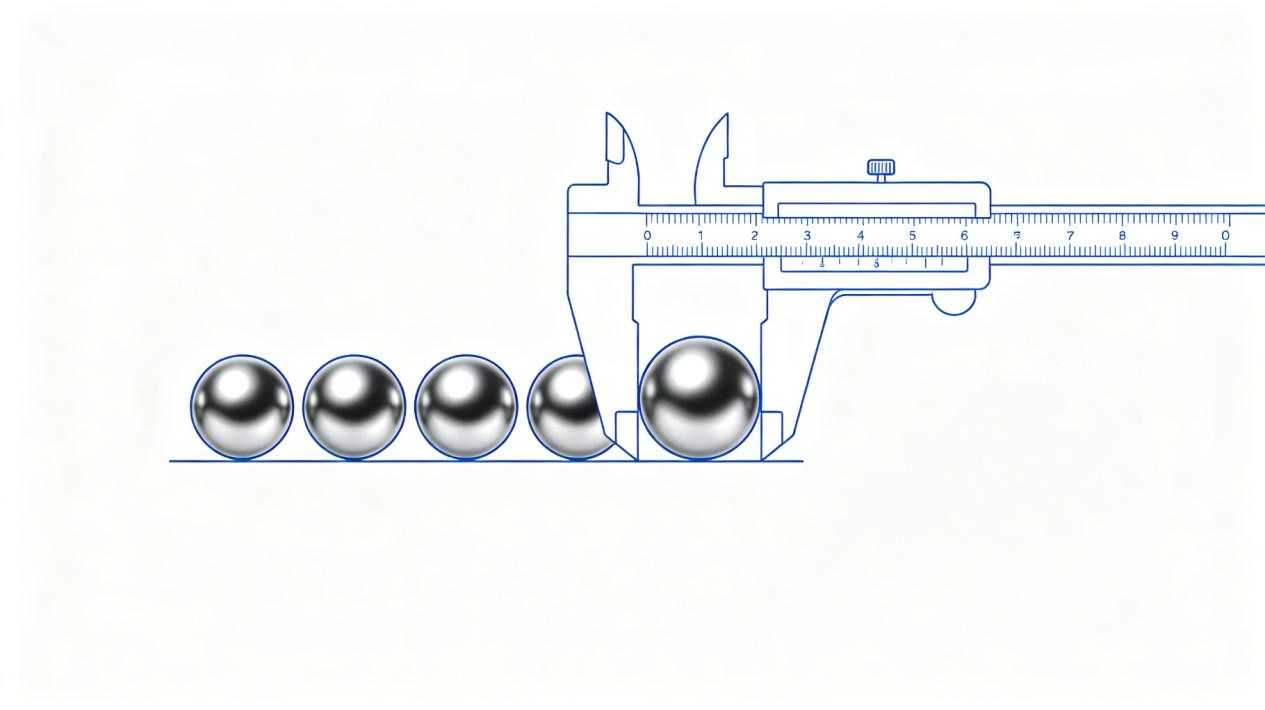
Caliper measuring precision balls for diameter tolerance inspection

Küresel Hassaslık Standartları ve Temel Ölçütler Kılavuzu

Behind a single millimeter-sized ball lies an entire system of micron-level precision. Introduction In valve seals, VCM motors, precision bearings, and inspection fixtures, tiny precision balls — bearing steel balls, ceramic balls, cemented carbide (tungsten carbide) balls — are critical components that are easy to overlook. When selecting balls, engineers and buyers often get lost in grade designations such as G3, G5, and G10. If a drawing says “G5,” is that the same ball under the Chinese national standard, the U.S. ABMA, ISO, German DIN, and Japanese JIS? And what do all those symbols — Vdws, ΔSph, Vdwl — actually mean on the shop floor? This article skips the theory and answers three things: how the five major standards relate to each other, how to read the five core metrics, and where buyers most often go wrong. 01 Five major standards: one ball, five sets of rules Five precision systems are most commonly referenced in the industry: Standard Full name Where it is typically used GB/T 308.1 Chinese National Standard — rolling bearing balls General standard for bearing steel balls in China; cemented carbide balls refer to JB/T 9145 ABMA 10A American Bearing Manufacturers Association North American equipment, imported valves, foreign-invested projects ISO 3290 International Organization for Standardization The global baseline; most national standards are modeled on it DIN 5401 German Institute for Standardization (DIN) European precision equipment and German-made machinery JIS B 1501 Japanese Industrial Standard Japanese equipment, and spares for Japanese/Korean production lines Important note: identical grade designations do not mean unconditional interchangeability. Although G3/G5/G10 carry the same numbers across standards, the test criteria, measurement conditions, and sorting rules behind them differ in detail. For export projects, confirm the original standard your customer cites; for domestic substitution projects, select against GB/T 308 together with the actual operating conditions. Grade comparison: the smaller the number after “G”, the tighter the tolerance ISO 3290 is the international baseline, and China’s GB/T 308.1 is substantially equivalent to it. DIN 5401 aligns with the ISO grades, and the JIS B 1501 grade sequence is essentially the same. ABMA 10A was originally written in imperial units, which is why you often see an “A” suffix (G5A, G10A). In plain terms: the smaller the number after the “G”, the smaller the permitted error, and the better the ball’s roundness and dimensional consistency. GB/T 308.1 ISO 3290 DIN 5401 JIS B 1501 ABMA 10A G3 G3 G3 G3 G3 G5 G5 G5 G5 G5A G10 G10 G10 G10 G10A G16 G16 G16 G16 G16A G20 G20 G20 G20 G20A The grade sequences line up, but the actual tolerance limits are governed by the text of each individual standard. 02 Five core metrics: what each symbol actually means Five key metrics, one for each dimension of ball quality. Ball diameter variation (Vdws) — is the ball the same diameter in every direction? In plain terms: measure one ball’s diameter in different directions; Vdws is the difference between the largest and smallest reading. If this value runs high, the ball is effectively a flattened ellipsoid. At high speed that shows up as runout, vibration, and noise. In sealing applications, an ellipsoidal ball cannot form a complete circular sealing line against the seat, which leads directly to leakage. Deviation from spherical form (ΔSph) — how far from a perfect sphere? In plain terms: how far the ball’s outer surface deviates from a mathematically perfect sphere. In a perfect sphere, every point on the surface is the same distance from the center. The larger ΔSph is, the more likely the surface has local high or low spots. Under load, those spots concentrate stress and are prone to denting; at a sealing face, point contact causes seal failure. Where cemented carbide balls run against valve seats, ΔSph is the metric that matters most. Lot diameter variation (Vdwl) — how uniform is the batch? In plain terms: within one delivered lot, the size difference between the largest and the smallest ball. Perfect roundness on a single ball is not enough — every ball in the lot needs to be as close in size as possible. In multi-ball drives, caged bearings, counterweights, and multi-ball positioning, a lot with scattered sizes means uneven loading, jamming, and wobble. Many customers check only single-ball specifications and ignore lot consistency — and that is usually where assembly problems come from later. Surface roughness (Ra) — how smooth is the surface, microscopically? In plain terms: the degree of micro-level unevenness on the ball surface. The lower the Ra value, the smoother the surface. Under high-speed friction, rough surfaces generate heat and wear faster. In precision sealing, even a tiny high spot or scratch becomes a leak path for the medium. After fine grinding, cemented carbide balls can reach Ra 0.01 μm for demanding sealing applications. Nominal diameter deviation — how far from the drawing’s nominal size? In plain terms: how much the actual ball size is allowed to differ from the nominal dimension on the drawing. If the drawing calls for φ3 mm, how many microns plus or minus are permitted? Many engineers look only at the G5 grade and ignore the nominal diameter tolerance band. The grade is a baseline; a drawing can always tighten tolerances further. Two G5 orders can therefore carry quite different dimensional limits. 03 Selection pitfalls: three practical rules Don’t order by grade alone A purchasing specification should not say only “G5 cemented carbide balls”. Write down: the standard and its version (for example GB/T 308.1-2013), the nominal diameter, the limits for the five metrics above, and the surface quality requirement. The more complete the specification, the smaller the surprise on delivery. Replacing an imported part with a domestic ball? Verify the limits first If the original equipment drawing cites ABMA, check that the limits for deviation from spherical form, surface roughness, and lot diameter variation are consistent before you substitute a GB/T G5 ball. Confirm the metrics are equivalent first — otherwise you can end up with vibration or seal leakage after
Read More
cemented carbide balls tungsten steel banner

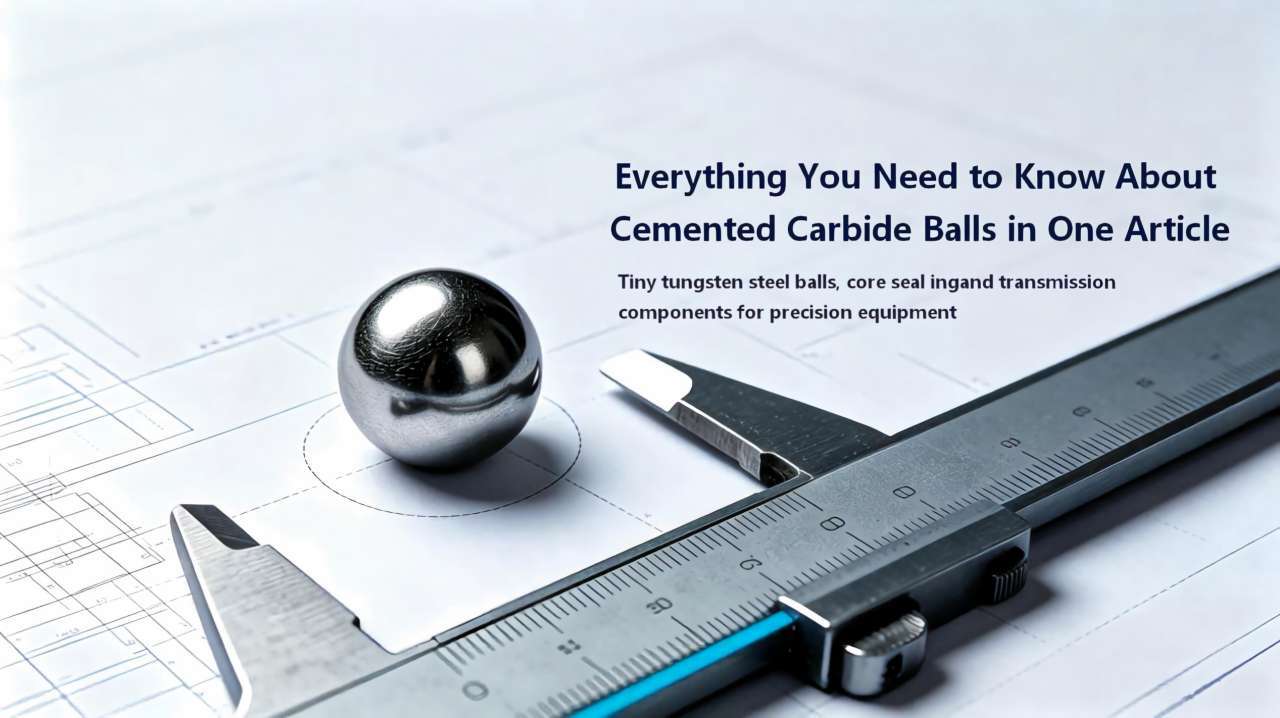
Çimenteli Karbür Toplar Hakkında Bilmeniz Gereken Her Şey Bir Yazıda

In the field of precision manufacturing, industry attention often focuses on large-scale equipment and complex structural components, making it all too easy to overlook small, basic components. Although cemented carbide balls (commonly known as tungsten steel balls) are unassuming miniature components, they directly determine the sealing precision, transmission stability, and overall service life of precision equipment, making them core industrial components essential for the long-term, stable operation of high-end machinery. At JNE New Material, we manufacture YG and YN series cemented carbide balls in diameters from 0.5 mm to 50 mm, with custom grades and sizes available on request. What Are Cemented Carbide Balls? Cemented carbide balls are high-precision spherical components manufactured using advanced powder metallurgy technology, with tungsten carbide as the hard matrix and cobalt or nickel as the binder phase. The industry primarily categorizes them into two main series: the YG series (tungsten-cobalt alloy) and the YN series (non-magnetic tungsten-nickel alloy). Compared to ordinary steel balls and bearing steel balls, the performance of both series of cemented carbide balls has been comprehensively upgraded. They address the pain points of traditional balls—such as susceptibility to wear, deformation, and corrosion, as well as poor precision—and can be specifically tailored to meet the precision manufacturing needs of different strengths, media, and operating conditions. They are currently the core foundational components in industrial precision manufacturing. Core Physical and Chemical Properties The outstanding adaptability of cemented carbide balls to various operating conditions stems from their stable and superior physical and chemical properties. At the same time, the YG and YN series exhibit significant differences in their properties due to variations in the binder phase material; this is the fundamental reason why these two product lines are suited for different operating conditions. Physical and Chemical Properties of Major Grades ① Physical Properties (by Grade): Property YG3X YG6 YG6X YG8 YG8N YG13 YN6 YN9 YN10 Test Condition Main Composition WC 97% Co 3% WC 94% Co 6% WC 94% Co 6% WC 92% Co 8% WC 91% Co 8% TaC 1% WC 87% Co 13% WC 94% Ni 6% WC 91% Ni 9% WC 90% Ni 10% Material specification Density (g/cm³) 15.0–15.3 14.7–15.0 14.7–15.0 14.5–14.9 14.8–14.9 14.0–14.4 14.5–14.9 14.2–14.6 14.0–14.4 Room temperature (23°C) Rockwell Hardness (HRA) 92–93.5 89.5–91 90–91.5 89–89.5 89.5–91.5 86–88 89–91 89–90 87–89 Room temperature (23°C) Flexural Strength (MPa) 1300–1800 1450–1600 1350–1700 1800–2300 1500–2000 2400–2800 1400–1800 1600–2000 1600–2200 Room temperature (23°C) Fracture Toughness (MPa·m1/2) 10–12 13–14 12–14 14–16 13–15 16–18 12–14 13–15 14–16 Room temperature (23°C) Temperature Resistance (°C) 400–500 400–500 400–500 400–500 400–500 400–500 400–500 400–500 400–500 23–1000°C Wear Resistance (Volumetric Wear Rate, mm³/(N·m)) ≤ 0.005 ≤ 0.008 ≤ 0.007 ≤ 0.01 ≤ 0.009 ≤ 0.02 ≤ 0.01 ≤ 0.015 ≤ 0.02 Dry sliding wear, room temperature Magnetic Properties Magnetic Magnetic Magnetic Magnetic Magnetic Magnetic Non-magnetic Non-magnetic Non-magnetic — ② Chemical Properties (by Grade): Property YG3X YG6 YG6X YG8 YG8N YG13 YN6 YN9 YN10 Test Condition Acid Resistance (Mass Loss Rate, %) < 0.1 < 0.1 < 0.1 < 0.1 < 0.1 < 0.1 < 0.1 < 0.1 < 0.1 Room temperature, 24 h, 10% hydrochloric acid Alkali Resistance (Mass Loss Rate, %) < 0.5 < 0.5 < 0.5 < 0.5 < 0.5 < 0.5 < 0.5 < 0.5 < 0.5 Room temperature, 24 h, 5% sodium hydroxide Resistance to Organic Solvents (Mass Loss Rate, %) < 0.05 < 0.05 < 0.05 < 0.05 < 0.05 < 0.05 < 0.05 < 0.05 < 0.05 72 h at room temperature, in ethanol/acetone High-Temp Oxidation Resistance (Mass Change Rate, %) < 0.2 < 0.2 < 0.2 < 0.2 < 0.2 < 0.2 < 0.2 < 0.2 < 0.2 1000°C, 100 h, in air High-Temp Acid & Alkali Corrosion Resistance (Mass Loss Rate, %) < 0.5 < 0.5 < 0.5 < 0.5 < 0.5 < 0.5 < 0.5 < 0.5 < 0.5 800°C/24 h, 20% sulfuric acid, 5% sodium hydroxide Thermal Shock Resistance (°C) 200–300 200–300 200–300 200–300 200–300 200–300 200–300 200–300 200–300 Rapid heating/cooling, no cracking Note: Data in this table is compiled from published material property tables of major cemented carbide grades and is provided for reference and comparison purposes. Exact values may vary by batch and manufacturing process — contact us for datasheets of specific grades. Full parameter table (including corrosion resistance, thermal conductivity, wear resistance and creep data for each grade): Precision Manufacturing Process The high precision and stability of cemented carbide balls rely not only on high-quality base materials but also on a standardized, meticulous powder metallurgy manufacturing process. Each step is subject to strict control to ensure consistent product quality. Precise Powder Blending: Formulations are tailored to each product series. The YG series uses a tungsten carbide + cobalt-based binder formulation, while the YN series employs a tungsten carbide + nickel-based binder formulation without added cobalt. For certain grades, trace amounts of TiN are added to refine grain size and enhance corrosion resistance. Thorough mixing via wet ball milling ensures uniform powder particle size and composition, establishing the performance differences between the two product lines at the source. Electronics and Digital Industry (YN Series): The YN series is non-magnetic, high-precision, and ultra-clean, free from magnetic interference. It is widely used in VCM (voice coil motors) and precision optical components, performing critical precision transmission functions such as lens autofocus and optical image stabilization. Precision Testing Instruments (YN Series): The YN series features stable material properties, is non-magnetic and corrosion-resistant, and exhibits minimal measurement error. It can be used as indenters for hardness testers, standard calibration spheres, and precision testing fixtures. General Industrial Applications (YG Series): The YG series offers excellent value for money and is wear-resistant and durable. It is widely used in precision bearings, pump seals, mechanical counterweights, sandblasting and grinding, and automated transmission equipment. Selection Guide: YG or YN? For general wear resistance, high-pressure sealing, mechanical counterweights, and general industrial applications, prioritize the YG series, which offers a balance of performance and cost-effectiveness. For non-magnetic environments, precision electronics, optical inspection, chemical corrosion, and high-cleanliness conditions, the YN series must be selected to avoid magnetic interference

Read More
products we offer

Sunulan Ürünler

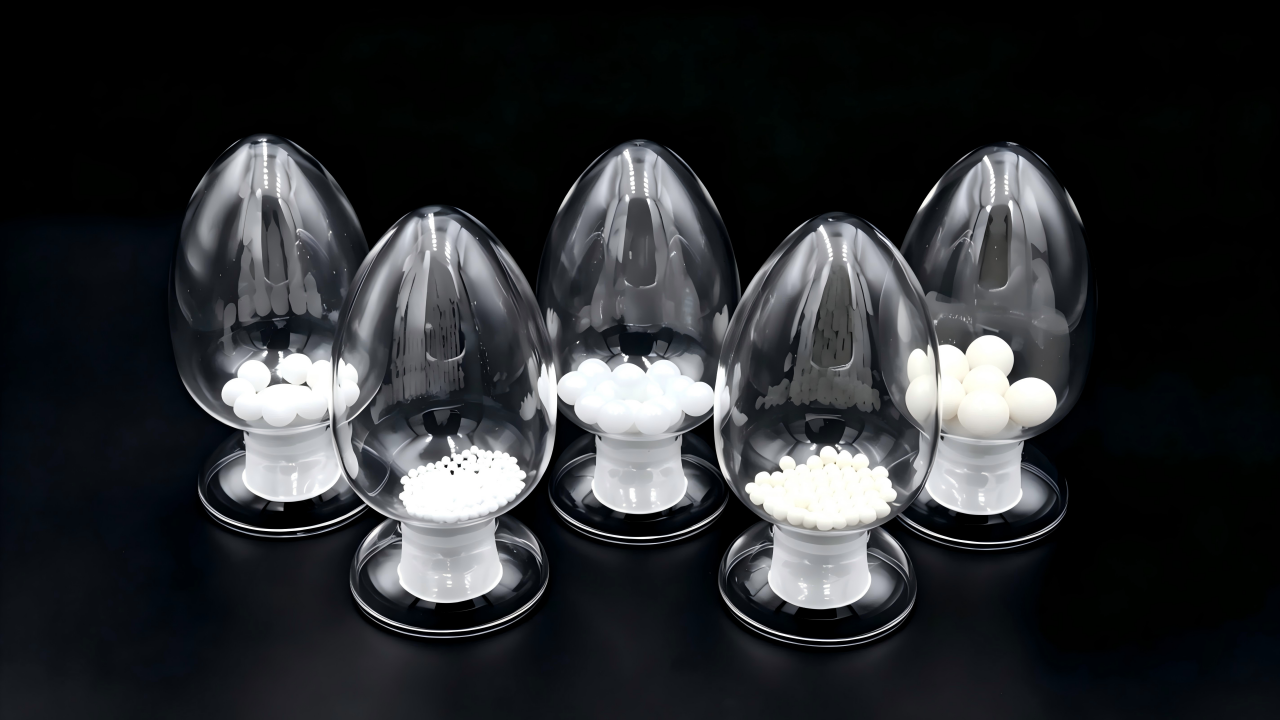
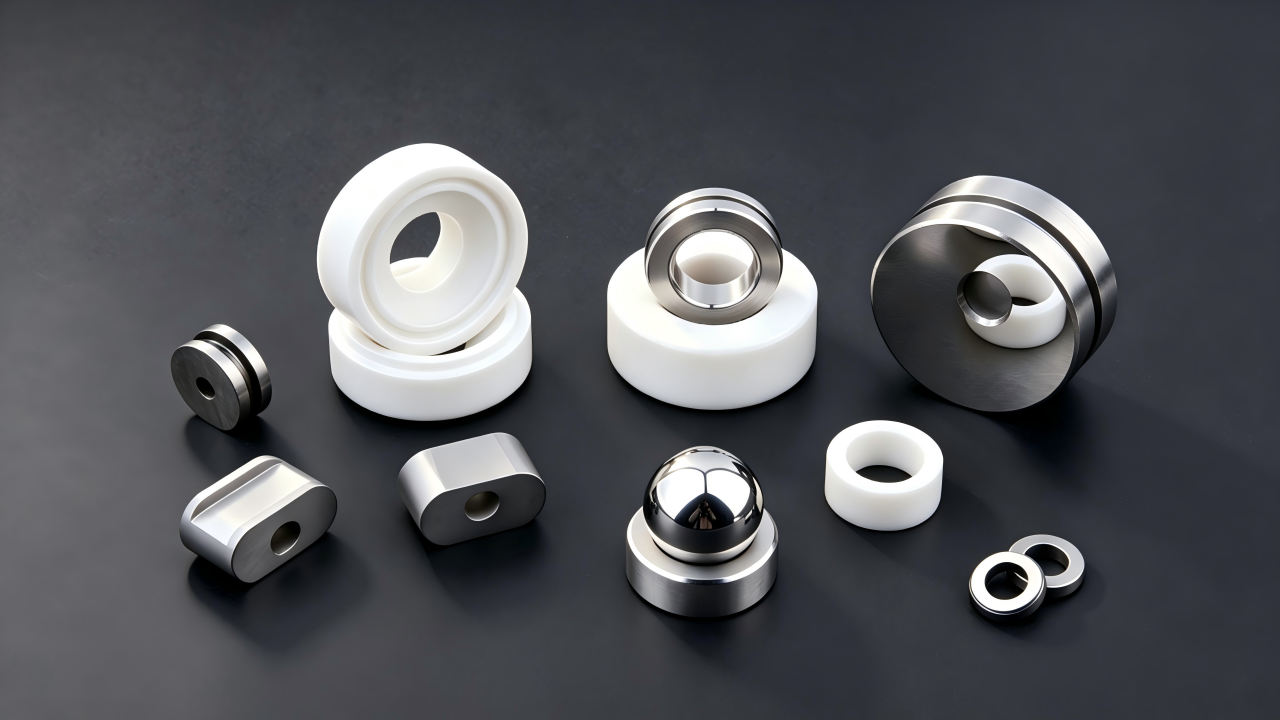
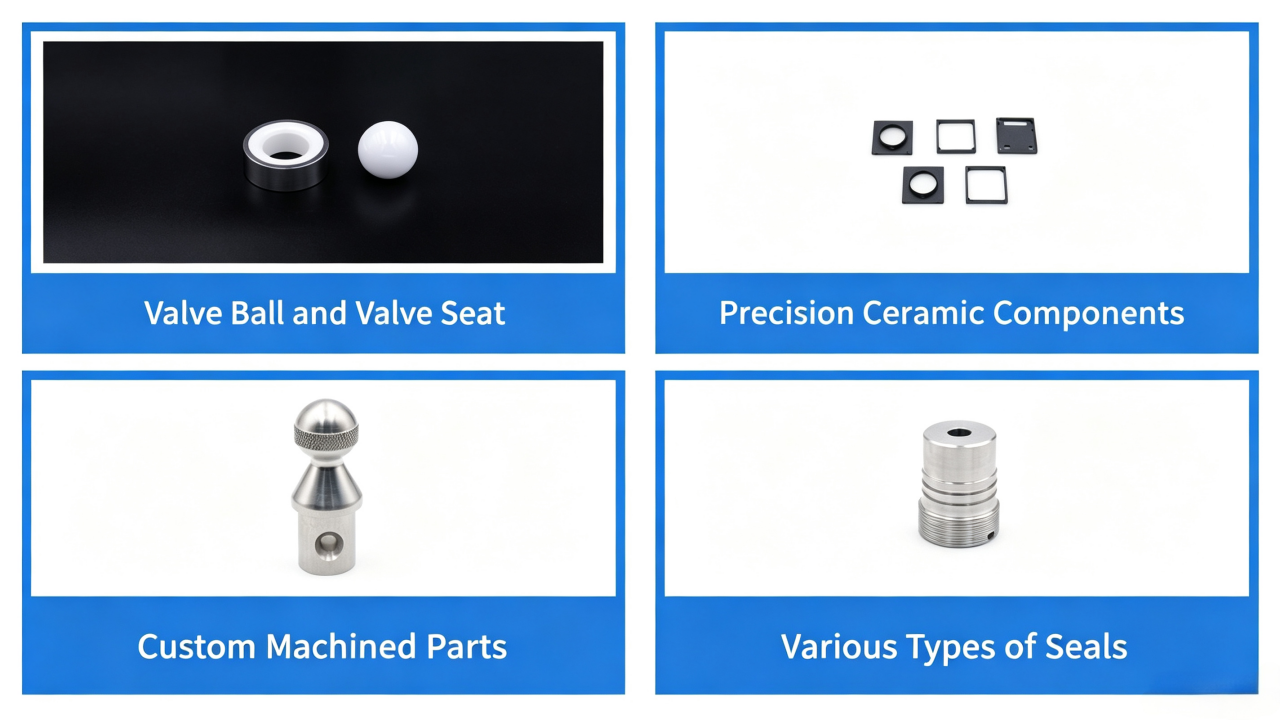
Başlıca Ürün Kategorileri Yüksek hassasiyetli küresel bileşenler, rulmanlar ve rulman grupları, valf küreleri ve oturumları, özelleştirilmiş hassas düzensiz şekilli parçalar İşlenebilir ve Uygulanabilir Malzemeler Seramikler (zirkonya, alümina, silikon nitrit, silikon karbür vb.) Sementlenmiş karbürler (YG3X, YG6, YG6X, YG8, YG8N, YG13, YN6, YN9, YN10 vb.) Monel alaşımları (MONEL K400, MONEL K450, MONEL K500 vb.) Paslanmaz çelik (304, 316, 316L, 410, 420, 440C vb.) Inconel alaşımları (Inconel 600, Inconel 601, Inconel 625, Inconel 718 vb.) Stellite alaşımları (Stellite 6B, Stellite 1, Stellite 4, STELLITE 8, STELLITE 12, STELLITE 20 vb.) Saf metaller (alüminyum, bakır, demir vb.) Diğer metaller (rulman çeliği CGr15, titanyum alaşımı TC4, Hastelloy C276 vb.) Plastikler (POM, PP, PA, BB, PEEK, PTFE vb.) Cam (optik cam vb.)

Read More
comparison of performance and applications of four major ceramic ball materials

Dört Ana Seramik Küre Malzemesinin Performans ve Uygulama Karşılaştırması: Zirkonya / Alümina / Silikon Karbür / Silikon Nitrit Seramik Küreler

Seramik küreler, hassas rulmanlarda, tıbbi cihazlarda, havacılık ve uzay teknolojilerinde, otomotiv sektöründe ve yüksek sıcaklıklara dayanıklı korozyon önleyici ekipmanlarda yaygın olarak kullanılmaktadır. Farklı malzemelerden üretilen seramik küreler, sertlik, yoğunluk, sıcaklık direnci ve korozyon direnci gibi temel özellikleri bakımından önemli farklılıklar gösterir. Aşağıda, ürün seçimi sürecine yardımcı olmak amacıyla dört ana akım seramik küre tipinin parametrelerini karşılaştıran bir tablo sunulmaktadır. Parametre Zirkonya Seramik Küreler Alümina Seramik Küreler Silikon Karbür Seramik Silikon Nitrit Seramik Küreler Ürün Görseli Görünüm Süt beyazı/bej Yüksek parlaklıkta, ince yüzey Son derece yüksek yüzey kalitesi Saf beyaz Sert dokusu Düzgün ve homojen görünüm Siyahımsı gri Mat yüzey Yoğun ve sıkı yapı Gri siyahımsı Pürüzsüz, mat yüzey Hassas cilalı, çapaksız Yoğunluk (g/cm³) 6,05 3,9 3,2 3,25 Rockwell Sertliği (HRA) 89-90 88-89 92-93 91-92 Yüksek Sıcaklık Direnci (°C) 1000°C 1200°C 1600°C 1300°C Basınç Dayanımı (MPa) 2000 1800 2200 2100 Korozyon Direnci Asit ve bazlara dayanıklı Korozyona dayanıklı Mükemmel yaşlanma direnci Zayıf asit ve bazlara karşı dayanıklı Güçlü asit ve baz ortamlarında dikkatli kullanım gerektirir Son derece yüksek korozyon direnci Güçlü asit ve bazlara karşı dayanıklı Çözücü erozyonuna karşı dayanıklı Üstün korozyon direnci Çeşitli zorlu kimyasal ortamlara uygun Yalıtım Özellikleri Yüksek yalıtım İletken olmayan Antistatik Ultra yüksek yalıtım İstikrarlı elektriksel performans Yarı yalıtkan Zayıf elektriksel iletkenlik Yüksek yalıtım Elektrik kaçırmayan yüksek sıcaklık direnci Temel Özellikler Mükemmel tokluk Çatlama ve kırılma riskine karşı dayanıklı Yüksek yüzey kalitesi Aşınmaya dayanıklı ve sessiz Yüksek hassasiyet Yüksek maliyet-etkinlik Yeterli sertlik İyi yalıtım Yüksek sıcaklık ve oksidasyon direnci Homojen yapı Son derece çok yönlü Ultra sert ve aşınmaya dayanıklı Ultra yüksek sıcaklık direnci Üstün korozyon direnci Düşük sürtünme katsayısı Yüksek sıcaklık ve basınca dayanıklı Son derece uzun hizmet ömrü Yüksek tokluk Termal şok direnci Yüksek ve düşük sıcaklıklar arasındaki değişime karşı dayanıklılık Aşınma ve yorgunluk direnci Hafif ağırlık Yüksek hızda çalışırken ısı birikimine ve hasara karşı dayanıklı Başlıca Uygulama Alanları Hassas rulmanlar Tıbbi cihazlar Gıda işleme makineleri Vanalar ve vana çekirdekleri Elektronik ekipmanlar Hassas ölçüm cihazları Yüksek Hızlı İletim Bileşenleri Kimyasal Paketleme Taşıma ve Cilalama Donanım bileşenleri Contalar Standart Rulmanlar Ev aletleri bileşenleri Su arıtma ekipmanları Yüksek Sıcaklık Ekipmanları Kimyasal Korozyona Dayanıklı Ekipmanlar Havacılık ve Uzay Teknolojileri Metalürji Makineleri Yüksek Basınç Aşınmaya Dayanıklı Aşırı İşlem Koşullarına Uygun Bileşenler Yüksek Hızlı Hassas Rulmanlar Rüzgar Enerjisi Ekipmanları Otomotiv Hassas Bileşenleri Havacılık ve Uzay Teknolojileri Yüksek Sıcaklık Güç Ekipmanları Özel renkler hakkında detaylı bilgi için lütfen müşteri hizmetlerimizle iletişime geçiniz. Özel hassas seramik küre ihtiyacınız varsa, belirtilen boyutları, toleransları ve çalışma koşullarını bize bildiriniz. Teknik ekibimiz size özel bir çözüm geliştirebilir. Ücretsiz teklif almak için çizimlerinizi ve spesifikasyonlarınızı bize göndermekten çekinmeyin.

Read More
about jne

JNE Hakkında

2016 yılında kurulan ve merkezi Zhejiang Eyaleti, Jiaxing kentinde bulunan JNE Yeni Malzemeler Ltd. Şti., üst düzey yeni malzemelerin Ar-Ge’si, akıllı üretimi ve endüstrileştirilmesine odaklanan ulusal düzeydeki bir yüksek teknoloji kuruluşudur. Şirket, yüksek hassasiyetli küreler, ultra hassas rulman bileşenleri, yüksek hassasiyetli bilyalı vana yuvaları ve çeşitli özel şekilli hassas parçalar konusunda uzmanlaşmıştır. Ürünleri; zirkonyum oksit, silikon nitrit, silikon karbür, alümina, sinterlenmiş karbür, manyetik olmayan alaşımlar, yüksek yoğunluklu alaşımlar, paslanmaz çelik, safir, plastik ve cam gibi çok sayıda yüksek kaliteli ham maddeyi kullanmaktadır. Ürün yelpazesi; ileri seramikler, sinterlenmiş karbürler, özel amaçlı alaşımlar, hassas metaller ve plastikler dahil olmak üzere tam bir ürün serisini kapsamaktadır. Kapsamlı spesifikasyonlar ve üstün hassasiyet sayesinde ürünlerimiz, çeşitli üst düzey uygulamalar için gereken sıkı işletme standartlarını karşılamaktadır. Yönetim açısından şirket, açık bir iç organizasyon yapısına ve sağlam bir yönetim sistemine sahip olarak, standartlaştırılmış, sistematikleştirilmiş ve rafine edilmiş bir operasyonel modeli benimsemektedir. ISO 9001:2015 Kalite Yönetim Sistemi, ISO 14001:2015 Çevre Yönetim Sistemi ve ISO 45001:2018 İş Sağlığı ve Güvenliği Yönetim Sistemi belgelerini elde etmiştir. Teknolojik açıdan şirket, sürekli olarak inovasyon odaklı bir gelişim stratejisini izlemekte; kendine ait temel teknolojilerin Ar-Ge’sine ve fikri mülkiyetin stratejik korunmasına büyük önem vermektedir. Bugüne kadar toplam 35 tane özgün patent almıştır; bunların 10“u buluş patenti, 25”i ise faydalı model patentidir. Geniş patent portföyü sayesinde güçlü temel teknolojik engeller oluşturmuş; ürün yeniliklerini sürekli olarak daha yüksek hassasiyet, daha yüksek performans ve daha yüksek katma değer kapasitesine doğru yönlendirmekte, böylece sektördeki lider konumunu istikrarlı biçimde pekiştirmektedir. Üretim açısından şirket, 3.000 metrekareden fazla alanı kaplayan yüksek standartlara sahip modern bir üretim tesisi işletmektedir. Standartlaştırılmış temiz odalar, gelişmiş akıllı işleme ekipmanları ve eksiksiz bir yüksek hassasiyetli fiziksel ve kimyasal test cihazları dizisiyle donatılmış bu tesis, geniş ölçekli seri üretim kapasitesi ile esnek, özelleştirilmiş Ar-Ge yetkinliklerini bir araya getirerek, yeterli üretim kapasitesi ve zamanında teslimatı garanti etmektedir. Aynı zamanda şirket, müşterilere çözüm tasarımı, prototip geliştirme, seri üretim, teknik entegrasyon ve satış sonrası destek gibi kapsamlı ve özenle sunulan hizmetlerle, farklı müşterilerin kişiselleştirilmiş özelleştirme ihtiyaçlarına esnek şekilde cevap verebilen tek noktadan son noktaya kadar uzanan bir hizmet sistemi kurmuştur. Ürünler açısından şirketin ürünleri; havacılık, yüksek teknolojili tıbbi hassas cihazlar, yarıiletken sıvı ekipmanları, yeni enerji ekipmanları, 5G iletişim, yüksek sınıf hidrolik ve pnömatik sistemler, hassas cihaz ve ölçüm cihazları, endüstriyel sıvı vanaları ve akıllı otomasyon ekipmanları gibi çok sayıda yüksek teknoloji ve son teknoloji sektöründe yaygın olarak kullanılmaktadır. Mükemmel itibarı sayesinde şirket, birçok sektör müşterisinin derin güvenini kazanmıştır. Satış ağı ülke genelini kapsamakta; ürünler hem yurt içinde hem de uluslararası pazarlara ihraç edilmektedir. JNE’deki tüm çalışanlar, şirketin “Mükemmel Kalite, Kendine Adanmış Azim ve Olağanüstü Mükemmellik” gibi temel kültürel değerlerini daima savunmaya kararlılıkla devam etmektedir. Ustalık, dürüstlük ve pragmatik ilerleme gibi kurucu ilkelerimize bağlı kalarak, premium ürünleri titiz standartlar doğrultusunda mükemmelleştiriyor ve samimi hizmetlerle sadık bir müşteri tabanı oluşturuyoruz. Geleceğe bakıldığında, şirket Ar-Ge yatırımlarını artırmaya, teknolojik inovasyon ve sanayi yükseltmesine odaklanmaya ve üst düzey hassas yeni malzemelerin akıllı üretimi alanında birinci sınıf yerli marka oluşturmaya azimle devam edecektir. Tüm kesimlerden iş ortaklarını, güçlerimizi birleştirip birlikte çalışarak, sektörde yeni fırsatları birlikte keşfedip iş birliğinin yeni bir geleceğini birlikte yaratmaya içtenlikle davet ediyoruz.

Read More