博客

  1. 首页
  2. / 博客
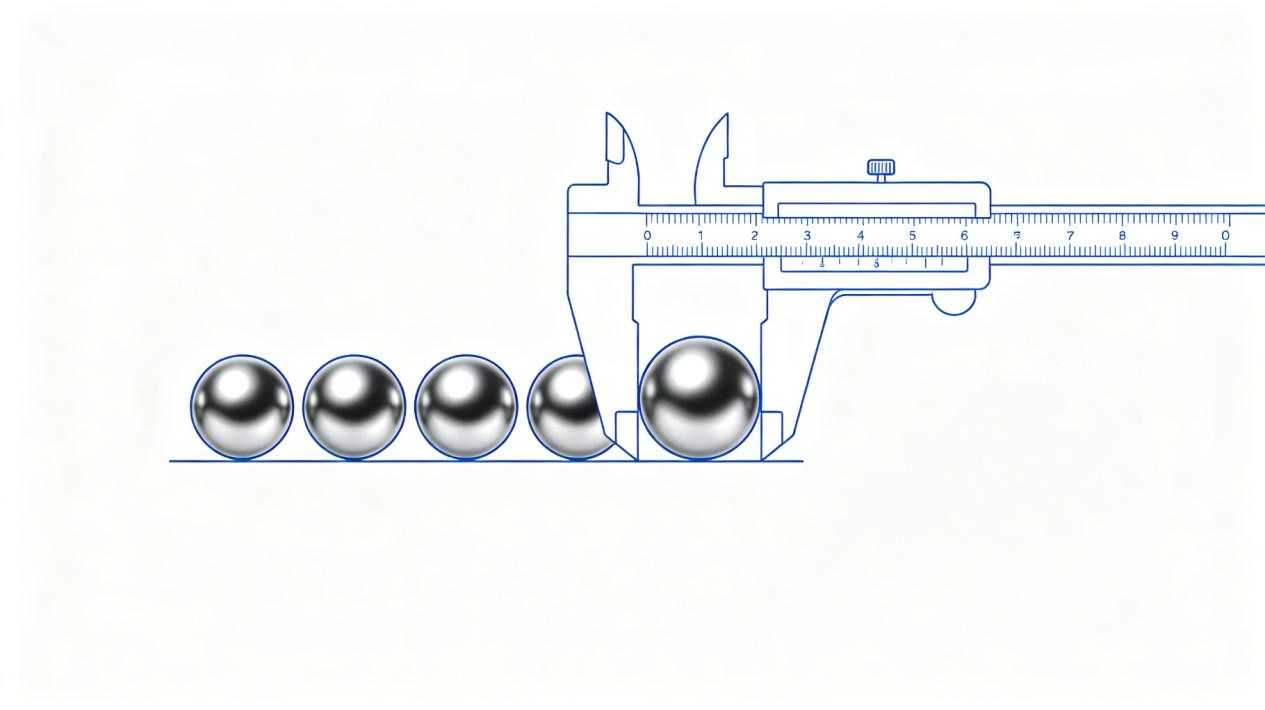
Caliper measuring precision balls for diameter tolerance inspection

球体精度标准与关键指标指南

Behind a single millimeter-sized ball lies an entire system of micron-level precision. Introduction In valve seals, VCM motors, precision bearings, and inspection fixtures, tiny precision balls — bearing steel balls, ceramic balls, cemented carbide (tungsten carbide) balls — are critical components that are easy to overlook. When selecting balls, engineers and buyers often get lost in grade designations such as G3, G5, and G10. If a drawing says “G5,” is that the same ball under the Chinese national standard, the U.S. ABMA, ISO, German DIN, and Japanese JIS? And what do all those symbols — Vdws, ΔSph, Vdwl — actually mean on the shop floor? This article skips the theory and answers three things: how the five major standards relate to each other, how to read the five core metrics, and where buyers most often go wrong. 01 Five major standards: one ball, five sets of rules Five precision systems are most commonly referenced in the industry: Standard Full name Where it is typically used GB/T 308.1 Chinese National Standard — rolling bearing balls General standard for bearing steel balls in China; cemented carbide balls refer to JB/T 9145 ABMA 10A American Bearing Manufacturers Association North American equipment, imported valves, foreign-invested projects ISO 3290 International Organization for Standardization The global baseline; most national standards are modeled on it DIN 5401 German Institute for Standardization (DIN) European precision equipment and German-made machinery JIS B 1501 Japanese Industrial Standard Japanese equipment, and spares for Japanese/Korean production lines Important note: identical grade designations do not mean unconditional interchangeability. Although G3/G5/G10 carry the same numbers across standards, the test criteria, measurement conditions, and sorting rules behind them differ in detail. For export projects, confirm the original standard your customer cites; for domestic substitution projects, select against GB/T 308 together with the actual operating conditions. Grade comparison: the smaller the number after “G”, the tighter the tolerance ISO 3290 is the international baseline, and China’s GB/T 308.1 is substantially equivalent to it. DIN 5401 aligns with the ISO grades, and the JIS B 1501 grade sequence is essentially the same. ABMA 10A was originally written in imperial units, which is why you often see an “A” suffix (G5A, G10A). In plain terms: the smaller the number after the “G”, the smaller the permitted error, and the better the ball’s roundness and dimensional consistency. GB/T 308.1 ISO 3290 DIN 5401 JIS B 1501 ABMA 10A G3 G3 G3 G3 G3 G5 G5 G5 G5 G5A G10 G10 G10 G10 G10A G16 G16 G16 G16 G16A G20 G20 G20 G20 G20A The grade sequences line up, but the actual tolerance limits are governed by the text of each individual standard. 02 Five core metrics: what each symbol actually means Five key metrics, one for each dimension of ball quality. Ball diameter variation (Vdws) — is the ball the same diameter in every direction? In plain terms: measure one ball’s diameter in different directions; Vdws is the difference between the largest and smallest reading. If this value runs high, the ball is effectively a flattened ellipsoid. At high speed that shows up as runout, vibration, and noise. In sealing applications, an ellipsoidal ball cannot form a complete circular sealing line against the seat, which leads directly to leakage. Deviation from spherical form (ΔSph) — how far from a perfect sphere? In plain terms: how far the ball’s outer surface deviates from a mathematically perfect sphere. In a perfect sphere, every point on the surface is the same distance from the center. The larger ΔSph is, the more likely the surface has local high or low spots. Under load, those spots concentrate stress and are prone to denting; at a sealing face, point contact causes seal failure. Where cemented carbide balls run against valve seats, ΔSph is the metric that matters most. Lot diameter variation (Vdwl) — how uniform is the batch? In plain terms: within one delivered lot, the size difference between the largest and the smallest ball. Perfect roundness on a single ball is not enough — every ball in the lot needs to be as close in size as possible. In multi-ball drives, caged bearings, counterweights, and multi-ball positioning, a lot with scattered sizes means uneven loading, jamming, and wobble. Many customers check only single-ball specifications and ignore lot consistency — and that is usually where assembly problems come from later. Surface roughness (Ra) — how smooth is the surface, microscopically? In plain terms: the degree of micro-level unevenness on the ball surface. The lower the Ra value, the smoother the surface. Under high-speed friction, rough surfaces generate heat and wear faster. In precision sealing, even a tiny high spot or scratch becomes a leak path for the medium. After fine grinding, cemented carbide balls can reach Ra 0.01 μm for demanding sealing applications. Nominal diameter deviation — how far from the drawing’s nominal size? In plain terms: how much the actual ball size is allowed to differ from the nominal dimension on the drawing. If the drawing calls for φ3 mm, how many microns plus or minus are permitted? Many engineers look only at the G5 grade and ignore the nominal diameter tolerance band. The grade is a baseline; a drawing can always tighten tolerances further. Two G5 orders can therefore carry quite different dimensional limits. 03 Selection pitfalls: three practical rules Don’t order by grade alone A purchasing specification should not say only “G5 cemented carbide balls”. Write down: the standard and its version (for example GB/T 308.1-2013), the nominal diameter, the limits for the five metrics above, and the surface quality requirement. The more complete the specification, the smaller the surprise on delivery. Replacing an imported part with a domestic ball? Verify the limits first If the original equipment drawing cites ABMA, check that the limits for deviation from spherical form, surface roughness, and lot diameter variation are consistent before you substitute a GB/T G5 ball. Confirm the metrics are equivalent first — otherwise you can end up with vibration or seal leakage after
Read More
cemented carbide balls tungsten steel banner

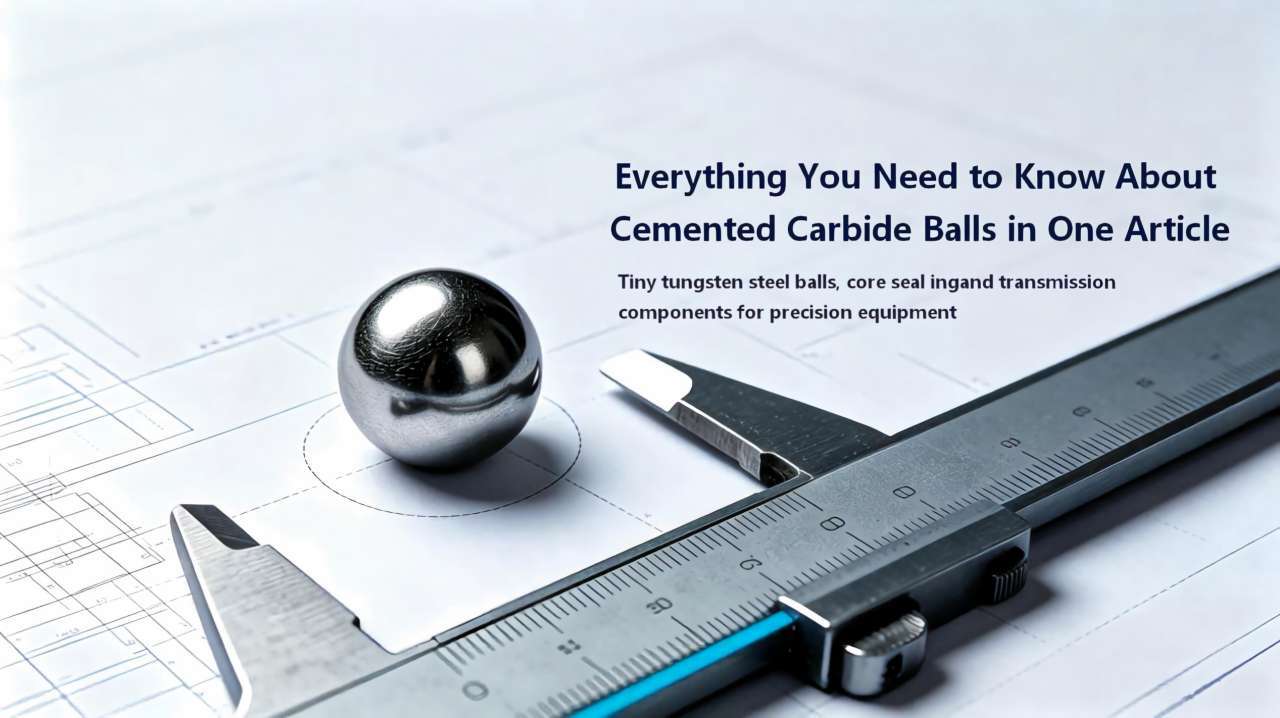
关于硬质合金球的方方面面,尽在一文

In the field of precision manufacturing, industry attention often focuses on large-scale equipment and complex structural components, making it all too easy to overlook small, basic components. Although cemented carbide balls (commonly known as tungsten steel balls) are unassuming miniature components, they directly determine the sealing precision, transmission stability, and overall service life of precision equipment, making them core industrial components essential for the long-term, stable operation of high-end machinery. At JNE New Material, we manufacture YG and YN series cemented carbide balls in diameters from 0.5 mm to 50 mm, with custom grades and sizes available on request. What Are Cemented Carbide Balls? Cemented carbide balls are high-precision spherical components manufactured using advanced powder metallurgy technology, with tungsten carbide as the hard matrix and cobalt or nickel as the binder phase. The industry primarily categorizes them into two main series: the YG series (tungsten-cobalt alloy) and the YN series (non-magnetic tungsten-nickel alloy). Compared to ordinary steel balls and bearing steel balls, the performance of both series of cemented carbide balls has been comprehensively upgraded. They address the pain points of traditional balls—such as susceptibility to wear, deformation, and corrosion, as well as poor precision—and can be specifically tailored to meet the precision manufacturing needs of different strengths, media, and operating conditions. They are currently the core foundational components in industrial precision manufacturing. Core Physical and Chemical Properties The outstanding adaptability of cemented carbide balls to various operating conditions stems from their stable and superior physical and chemical properties. At the same time, the YG and YN series exhibit significant differences in their properties due to variations in the binder phase material; this is the fundamental reason why these two product lines are suited for different operating conditions. Physical and Chemical Properties of Major Grades ① Physical Properties (by Grade): Property YG3X YG6 YG6X YG8 YG8N YG13 YN6 YN9 YN10 Test Condition Main Composition WC 97% Co 3% WC 94% Co 6% WC 94% Co 6% WC 92% Co 8% WC 91% Co 8% TaC 1% WC 87% Co 13% WC 94% Ni 6% WC 91% Ni 9% WC 90% Ni 10% Material specification Density (g/cm³) 15.0–15.3 14.7–15.0 14.7–15.0 14.5–14.9 14.8–14.9 14.0–14.4 14.5–14.9 14.2–14.6 14.0–14.4 Room temperature (23°C) Rockwell Hardness (HRA) 92–93.5 89.5–91 90–91.5 89–89.5 89.5–91.5 86–88 89–91 89–90 87–89 Room temperature (23°C) Flexural Strength (MPa) 1300–1800 1450–1600 1350–1700 1800–2300 1500–2000 2400–2800 1400–1800 1600–2000 1600–2200 Room temperature (23°C) Fracture Toughness (MPa·m1/2) 10–12 13–14 12–14 14–16 13–15 16–18 12–14 13–15 14–16 Room temperature (23°C) Temperature Resistance (°C) 400–500 400–500 400–500 400–500 400–500 400–500 400–500 400–500 400–500 23–1000°C Wear Resistance (Volumetric Wear Rate, mm³/(N·m)) ≤ 0.005 ≤ 0.008 ≤ 0.007 ≤ 0.01 ≤ 0.009 ≤ 0.02 ≤ 0.01 ≤ 0.015 ≤ 0.02 Dry sliding wear, room temperature Magnetic Properties Magnetic Magnetic Magnetic Magnetic Magnetic Magnetic Non-magnetic Non-magnetic Non-magnetic — ② Chemical Properties (by Grade): Property YG3X YG6 YG6X YG8 YG8N YG13 YN6 YN9 YN10 Test Condition Acid Resistance (Mass Loss Rate, %) < 0.1 < 0.1 < 0.1 < 0.1 < 0.1 < 0.1 < 0.1 < 0.1 < 0.1 Room temperature, 24 h, 10% hydrochloric acid Alkali Resistance (Mass Loss Rate, %) < 0.5 < 0.5 < 0.5 < 0.5 < 0.5 < 0.5 < 0.5 < 0.5 < 0.5 Room temperature, 24 h, 5% sodium hydroxide Resistance to Organic Solvents (Mass Loss Rate, %) < 0.05 < 0.05 < 0.05 < 0.05 < 0.05 < 0.05 < 0.05 < 0.05 < 0.05 72 h at room temperature, in ethanol/acetone High-Temp Oxidation Resistance (Mass Change Rate, %) < 0.2 < 0.2 < 0.2 < 0.2 < 0.2 < 0.2 < 0.2 < 0.2 < 0.2 1000°C, 100 h, in air High-Temp Acid & Alkali Corrosion Resistance (Mass Loss Rate, %) < 0.5 < 0.5 < 0.5 < 0.5 < 0.5 < 0.5 < 0.5 < 0.5 < 0.5 800°C/24 h, 20% sulfuric acid, 5% sodium hydroxide Thermal Shock Resistance (°C) 200–300 200–300 200–300 200–300 200–300 200–300 200–300 200–300 200–300 Rapid heating/cooling, no cracking Note: Data in this table is compiled from published material property tables of major cemented carbide grades and is provided for reference and comparison purposes. Exact values may vary by batch and manufacturing process — contact us for datasheets of specific grades. Full parameter table (including corrosion resistance, thermal conductivity, wear resistance and creep data for each grade): Precision Manufacturing Process The high precision and stability of cemented carbide balls rely not only on high-quality base materials but also on a standardized, meticulous powder metallurgy manufacturing process. Each step is subject to strict control to ensure consistent product quality. Precise Powder Blending: Formulations are tailored to each product series. The YG series uses a tungsten carbide + cobalt-based binder formulation, while the YN series employs a tungsten carbide + nickel-based binder formulation without added cobalt. For certain grades, trace amounts of TiN are added to refine grain size and enhance corrosion resistance. Thorough mixing via wet ball milling ensures uniform powder particle size and composition, establishing the performance differences between the two product lines at the source. Electronics and Digital Industry (YN Series): The YN series is non-magnetic, high-precision, and ultra-clean, free from magnetic interference. It is widely used in VCM (voice coil motors) and precision optical components, performing critical precision transmission functions such as lens autofocus and optical image stabilization. Precision Testing Instruments (YN Series): The YN series features stable material properties, is non-magnetic and corrosion-resistant, and exhibits minimal measurement error. It can be used as indenters for hardness testers, standard calibration spheres, and precision testing fixtures. General Industrial Applications (YG Series): The YG series offers excellent value for money and is wear-resistant and durable. It is widely used in precision bearings, pump seals, mechanical counterweights, sandblasting and grinding, and automated transmission equipment. Selection Guide: YG or YN? For general wear resistance, high-pressure sealing, mechanical counterweights, and general industrial applications, prioritize the YG series, which offers a balance of performance and cost-effectiveness. For non-magnetic environments, precision electronics, optical inspection, chemical corrosion, and high-cleanliness conditions, the YN series must be selected to avoid magnetic interference

Read More
products we offer

我们提供的产品

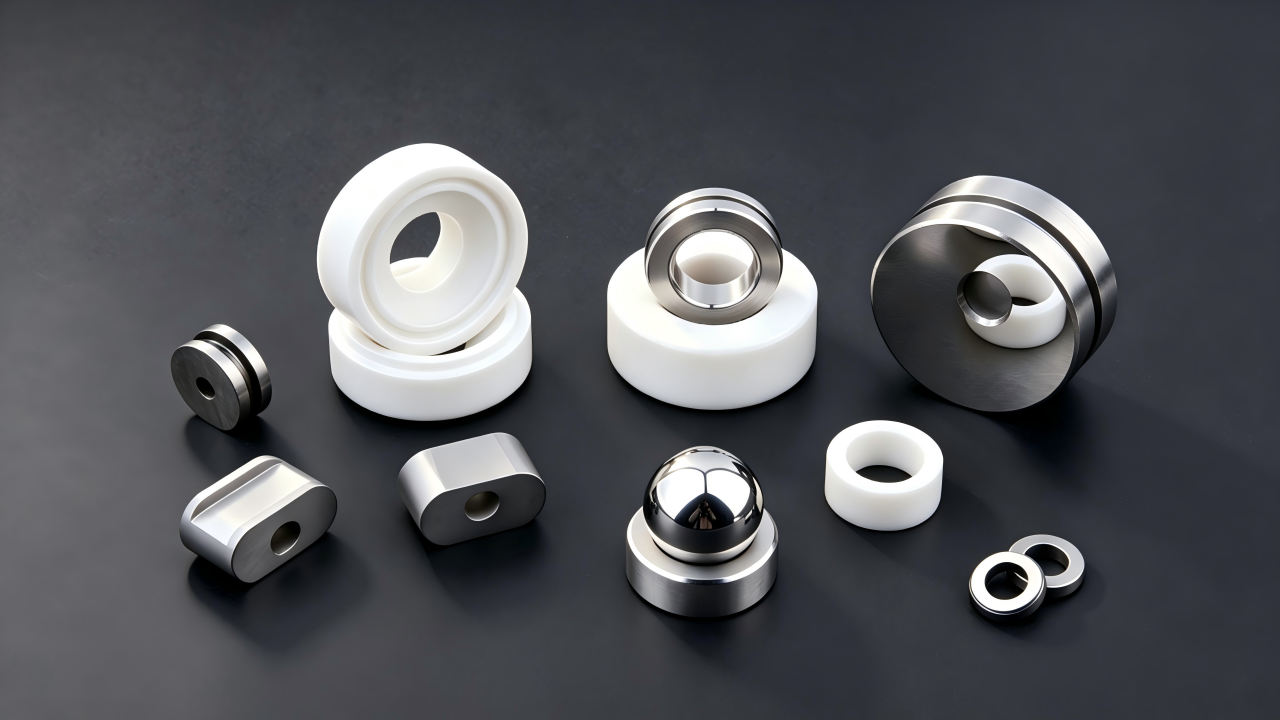
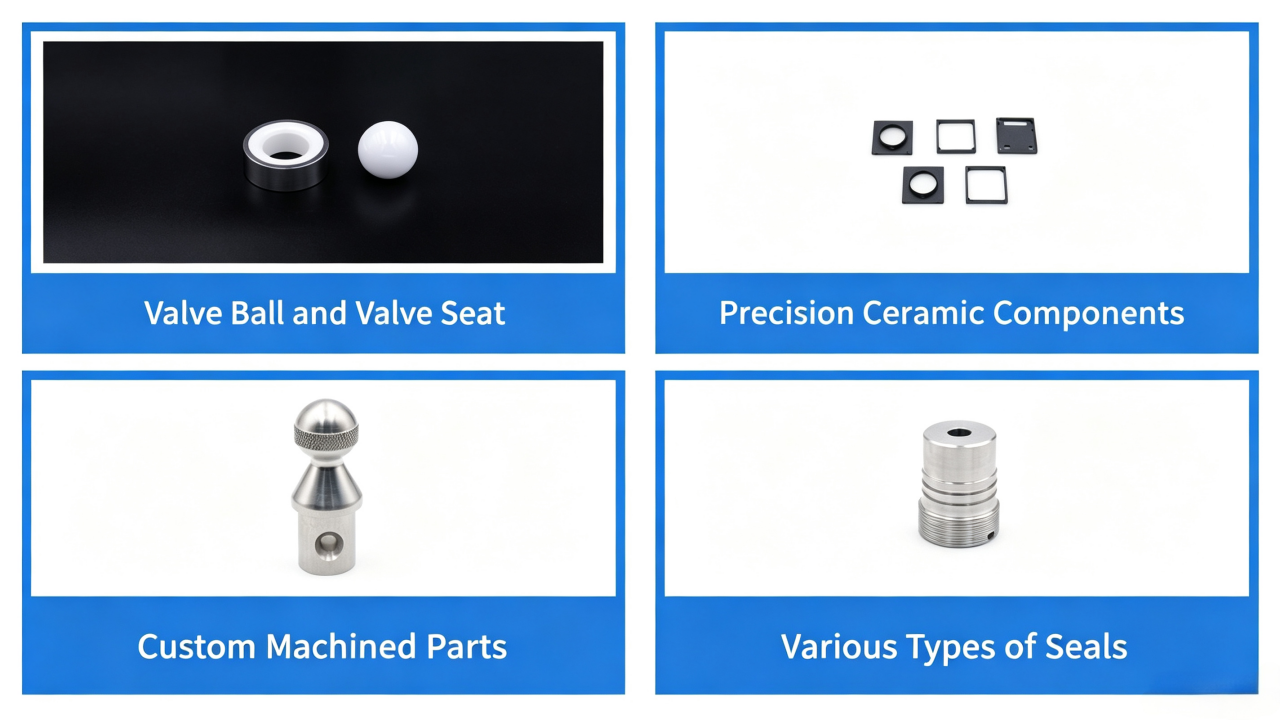
主要产品类别 高精度球形部件、轴承及轴承组件、阀球与阀座、定制精密异形零件 可加工及适用材料 陶瓷类(氧化锆、氧化铝、氮化硅、碳化硅等) 硬质合金类(YG3X、YG6、YG6X、YG8、YG8N、YG13、YN6、YN9、YN10等) 蒙乃尔合金(MONEL K400、MONEL K450、MONEL K500等) 不锈钢类(304、316、316L、410、420、440C等) 因科镍合金(Inconel 600、Inconel 601、Inconel 625、Inconel 718等) 斯特莱特合金(Stellite 6B、Stellite 1、Stellite 4、STELLITE 8、STELLITE 12、STELLITE 20等) 纯金属类(铝、铜、铁等) 其他金属类(轴承钢CGr15、钛合金TC4、哈氏合金C276等) 塑料类(POM、PP、PA、BB、PEEK、PTFE等) 玻璃类(光学玻璃等)

Read More
comparison of performance and applications of four major ceramic ball materials

四种主要陶瓷球材料的性能与应用对比:氧化锆 / 氧化铝 / 碳化硅 / 氮化硅陶瓷球

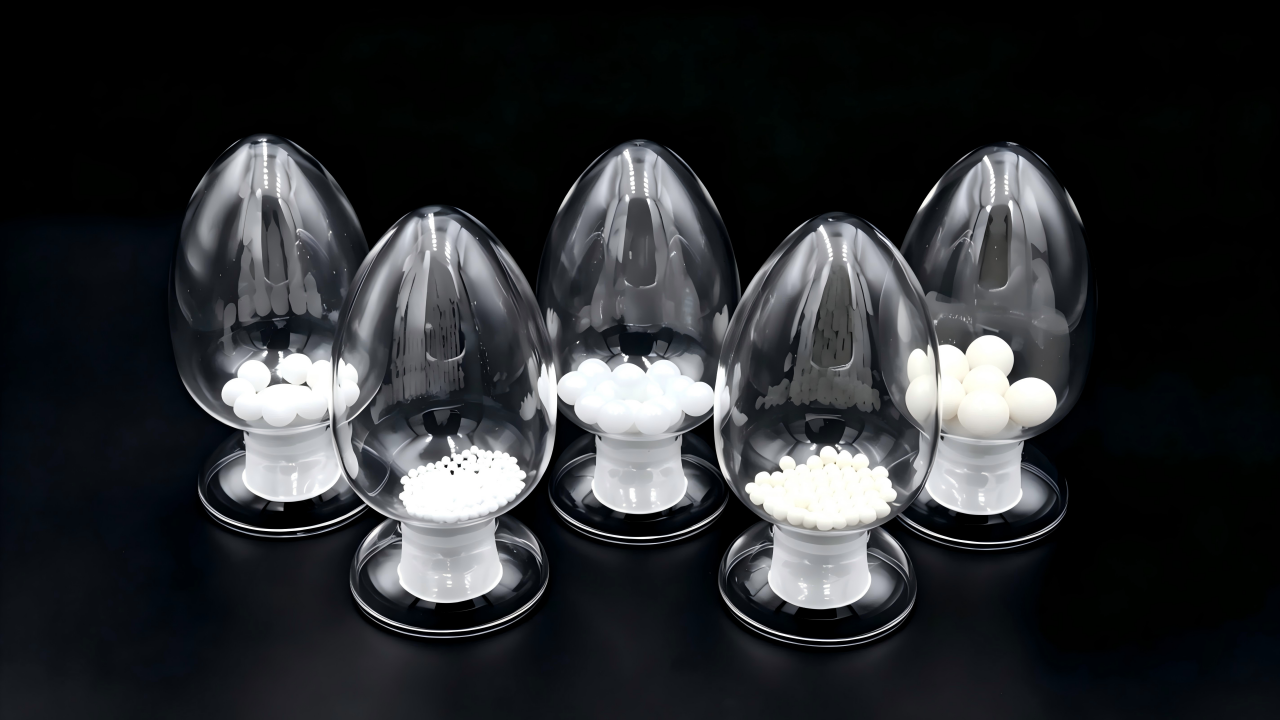
陶瓷球广泛应用于精密轴承、医疗器械、航空航天、汽车以及高温耐腐蚀设备等领域。不同材质制成的陶瓷球在硬度、密度、耐温性及耐腐蚀性等核心性能方面存在显著差异。以下为四种主流陶瓷球类型的参数对比表,以助于产品选型。 参数 氧化锆陶瓷球 氧化铝陶瓷球 碳化硅陶瓷球 氮化硅陶瓷球 产品图片 外观 乳白色/米色 高光泽、表面细腻 表面光洁度极高 纯白色 硬质纹理 外观整洁均匀 黑灰色 表面呈哑光 组织致密紧凑 灰黑色 表面光滑 哑光处理 精密抛光、无毛刺 密度(g/cm³) 6.05 3.9 3.2 3.25 洛氏硬度(HRA) 89-90 88-89 92-93 91-92 耐高温性(°C) 1000°C 1200°C 1600°C 1300°C 抗压强度(MPa) 2000 1800 2200 2100 耐腐蚀性 耐酸碱 耐腐蚀 耐老化性能优异 耐弱酸弱碱 强酸强碱环境下需谨慎使用 耐腐蚀性极佳 耐强酸强碱 耐溶剂侵蚀 耐腐蚀性能优越 适用于多种恶劣化学环境 绝缘性能 绝缘性高 不导电 抗静电 绝缘性超高 电气性能稳定 半绝缘 导电性较弱 绝缘性高 高温下仍能绝缘且无漏电现象 主要特点 韧性优异 抗崩边开裂 表面光洁度高 耐磨静音 精度高 性价比高 硬度足够 绝缘性能良好 耐高温抗氧化 组织均匀 适用范围极广 超硬超耐磨 耐超高温 耐腐蚀性能卓越 摩擦系数低 耐高温高压 使用寿命极长 韧性高 抗热震性强 耐高低温交替 耐磨损与疲劳 重量轻 高速运转时不易积热受损 主要应用行业 精密轴承 医疗器械 食品加工机械 阀门及阀芯 电子设备 精密仪器 高速传动部件 化工包装 研磨抛光 五金配件 密封件 标准轴承 家用电器部件 水处理设备 高温设备 化学耐腐蚀设备 航空航天 冶金机械 高压耐磨部件 极端工况下的零部件 高速精密轴承 风力发电设备 汽车精密部件 航空航天 高温动力设备 如需定制颜色,请联系客服咨询详情。 若您有定制精密陶瓷球的需求,请提供具体尺寸、公差及使用工况要求,我们的技术团队将为您量身打造解决方案。欢迎发送图纸及规格说明,获取免费报价。.

Read More
about jne

关于杰奈尔

成立于2016年,总部位于浙江省嘉兴市的杰奈尔新材料有限公司,是一家专注于高端新材料研发、智能制造及产业化的国家级高新技术企业。公司主营高精度球体、超精密轴承部件、高精度球阀阀座以及各类异形定制精密零部件。产品广泛采用氧化锆、氮化硅、碳化硅、氧化铝、硬质合金、非磁性合金、高密度合金、不锈钢、蓝宝石、塑料和玻璃等多种优质原材料,涵盖先进陶瓷、硬质合金、特种合金、精密金属及塑料等全系列品类。凭借全面的规格体系与卓越的加工精度,产品能够满足各类高端应用所需的严苛性能标准。在管理方面,公司坚持标准化、系统化、精细化的运营模式,内部组织架构清晰,管理体系健全,并先后通过ISO 9001:2015质量管理体系、ISO 14001:2015环境管理体系以及ISO 45001:2018职业健康安全管理体系认证。在技术层面,公司始终奉行创新驱动的发展战略,高度重视自主核心技术的研发与知识产权的战略保护。截至目前,已累计获得35项自主专利,其中包括10项发明专利和25项实用新型专利。依托丰富的专利技术储备,公司构建起坚实的核心技术壁垒,持续推动产品向更高精度、更优性能及更高附加值方向升级,稳步巩固行业领先地位。生产方面,公司建有超过3,000平方米的高标准现代化生产基地,配备符合规范的洁净车间、先进的智能化加工设备以及齐全的高精度理化检测仪器,兼具大规模量产能力与灵活的定制化研发实力,确保充足的产能与准时交付。同时,公司建立了覆盖全流程的一站式服务体系,为客户提供包括方案设计、原型开发、批量生产、技术集成及售后支持在内的全方位贴心服务,灵活满足不同客户的个性化定制需求。产品应用领域广泛,覆盖航空航天、高端医疗精密仪器、半导体流体设备、新能源装备、5G通信、高端液压气动、精密仪器仪表、工业流体阀门以及智能自动化设备等诸多高科技前沿行业。凭借良好的品牌口碑,公司赢得了众多行业客户的高度信赖,销售网络遍布全国,并远销海内外市场。杰奈尔人始终坚守“卓越品质、专注承诺、非凡卓越”的企业核心价值观,秉持匠心精神、诚信理念与务实进取的态度,以精益求精的标准打造优质产品,以真诚周到的服务赢得忠实客户群体。展望未来,公司将持续加大研发投入,聚焦技术创新与产业升级,致力于打造国内一流的高端精密新材料智能制造品牌。我们诚挚邀请各界合作伙伴携手同行,共谋发展,在开拓行业新机遇的同时,共创合作共赢的美好未来。.

Read More