Блог

  1. Главная
  2. / Блог
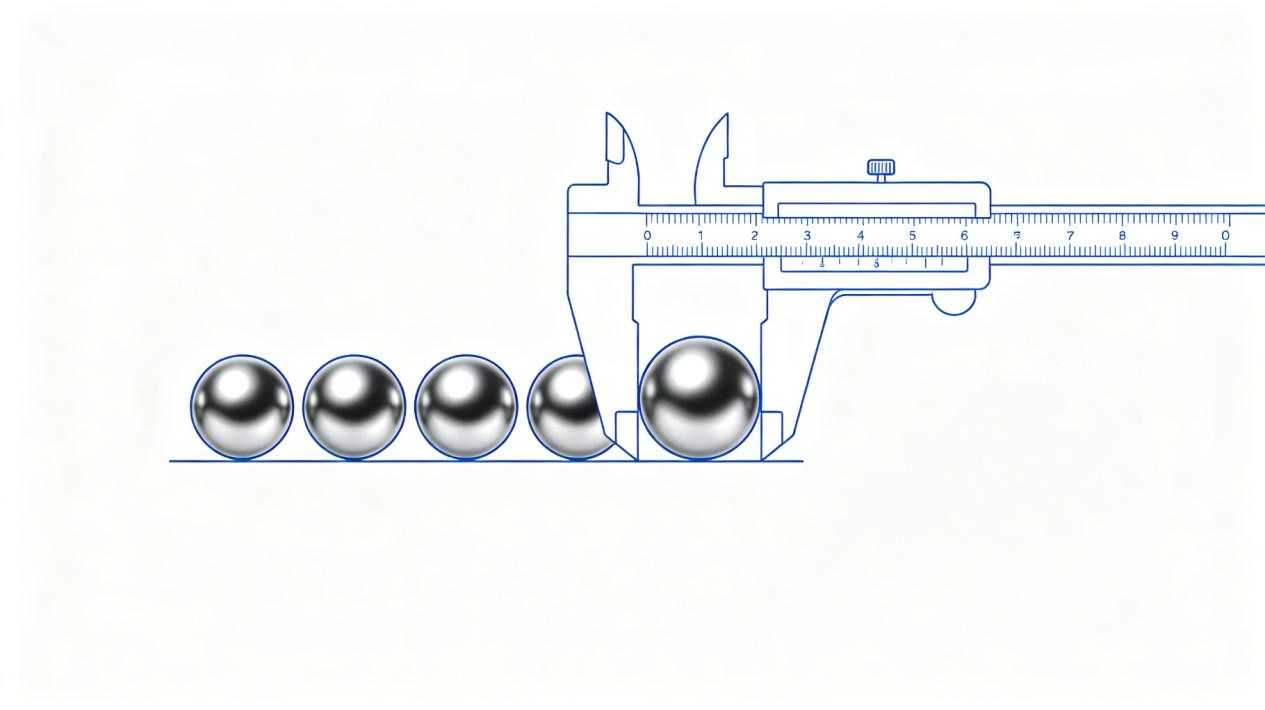
Caliper measuring precision balls for diameter tolerance inspection

Руководство по сферическим прецизионным стандартам и ключевым метрикам

Behind a single millimeter-sized ball lies an entire system of micron-level precision. Introduction In valve seals, VCM motors, precision bearings, and inspection fixtures, tiny precision balls — bearing steel balls, ceramic balls, cemented carbide (tungsten carbide) balls — are critical components that are easy to overlook. When selecting balls, engineers and buyers often get lost in grade designations such as G3, G5, and G10. If a drawing says “G5,” is that the same ball under the Chinese national standard, the U.S. ABMA, ISO, German DIN, and Japanese JIS? And what do all those symbols — Vdws, ΔSph, Vdwl — actually mean on the shop floor? This article skips the theory and answers three things: how the five major standards relate to each other, how to read the five core metrics, and where buyers most often go wrong. 01 Five major standards: one ball, five sets of rules Five precision systems are most commonly referenced in the industry: Standard Full name Where it is typically used GB/T 308.1 Chinese National Standard — rolling bearing balls General standard for bearing steel balls in China; cemented carbide balls refer to JB/T 9145 ABMA 10A American Bearing Manufacturers Association North American equipment, imported valves, foreign-invested projects ISO 3290 International Organization for Standardization The global baseline; most national standards are modeled on it DIN 5401 German Institute for Standardization (DIN) European precision equipment and German-made machinery JIS B 1501 Japanese Industrial Standard Japanese equipment, and spares for Japanese/Korean production lines Important note: identical grade designations do not mean unconditional interchangeability. Although G3/G5/G10 carry the same numbers across standards, the test criteria, measurement conditions, and sorting rules behind them differ in detail. For export projects, confirm the original standard your customer cites; for domestic substitution projects, select against GB/T 308 together with the actual operating conditions. Grade comparison: the smaller the number after “G”, the tighter the tolerance ISO 3290 is the international baseline, and China’s GB/T 308.1 is substantially equivalent to it. DIN 5401 aligns with the ISO grades, and the JIS B 1501 grade sequence is essentially the same. ABMA 10A was originally written in imperial units, which is why you often see an “A” suffix (G5A, G10A). In plain terms: the smaller the number after the “G”, the smaller the permitted error, and the better the ball’s roundness and dimensional consistency. GB/T 308.1 ISO 3290 DIN 5401 JIS B 1501 ABMA 10A G3 G3 G3 G3 G3 G5 G5 G5 G5 G5A G10 G10 G10 G10 G10A G16 G16 G16 G16 G16A G20 G20 G20 G20 G20A The grade sequences line up, but the actual tolerance limits are governed by the text of each individual standard. 02 Five core metrics: what each symbol actually means Five key metrics, one for each dimension of ball quality. Ball diameter variation (Vdws) — is the ball the same diameter in every direction? In plain terms: measure one ball’s diameter in different directions; Vdws is the difference between the largest and smallest reading. If this value runs high, the ball is effectively a flattened ellipsoid. At high speed that shows up as runout, vibration, and noise. In sealing applications, an ellipsoidal ball cannot form a complete circular sealing line against the seat, which leads directly to leakage. Deviation from spherical form (ΔSph) — how far from a perfect sphere? In plain terms: how far the ball’s outer surface deviates from a mathematically perfect sphere. In a perfect sphere, every point on the surface is the same distance from the center. The larger ΔSph is, the more likely the surface has local high or low spots. Under load, those spots concentrate stress and are prone to denting; at a sealing face, point contact causes seal failure. Where cemented carbide balls run against valve seats, ΔSph is the metric that matters most. Lot diameter variation (Vdwl) — how uniform is the batch? In plain terms: within one delivered lot, the size difference between the largest and the smallest ball. Perfect roundness on a single ball is not enough — every ball in the lot needs to be as close in size as possible. In multi-ball drives, caged bearings, counterweights, and multi-ball positioning, a lot with scattered sizes means uneven loading, jamming, and wobble. Many customers check only single-ball specifications and ignore lot consistency — and that is usually where assembly problems come from later. Surface roughness (Ra) — how smooth is the surface, microscopically? In plain terms: the degree of micro-level unevenness on the ball surface. The lower the Ra value, the smoother the surface. Under high-speed friction, rough surfaces generate heat and wear faster. In precision sealing, even a tiny high spot or scratch becomes a leak path for the medium. After fine grinding, cemented carbide balls can reach Ra 0.01 μm for demanding sealing applications. Nominal diameter deviation — how far from the drawing’s nominal size? In plain terms: how much the actual ball size is allowed to differ from the nominal dimension on the drawing. If the drawing calls for φ3 mm, how many microns plus or minus are permitted? Many engineers look only at the G5 grade and ignore the nominal diameter tolerance band. The grade is a baseline; a drawing can always tighten tolerances further. Two G5 orders can therefore carry quite different dimensional limits. 03 Selection pitfalls: three practical rules Don’t order by grade alone A purchasing specification should not say only “G5 cemented carbide balls”. Write down: the standard and its version (for example GB/T 308.1-2013), the nominal diameter, the limits for the five metrics above, and the surface quality requirement. The more complete the specification, the smaller the surprise on delivery. Replacing an imported part with a domestic ball? Verify the limits first If the original equipment drawing cites ABMA, check that the limits for deviation from spherical form, surface roughness, and lot diameter variation are consistent before you substitute a GB/T G5 ball. Confirm the metrics are equivalent first — otherwise you can end up with vibration or seal leakage after
Read More
cemented carbide balls tungsten steel banner

Всё, что нужно знать о шарах из цементированного карбида, — в одной статье

In the field of precision manufacturing, industry attention often focuses on large-scale equipment and complex structural components, making it all too easy to overlook small, basic components. Although cemented carbide balls (commonly known as tungsten steel balls) are unassuming miniature components, they directly determine the sealing precision, transmission stability, and overall service life of precision equipment, making them core industrial components essential for the long-term, stable operation of high-end machinery. At JNE New Material, we manufacture YG and YN series cemented carbide balls in diameters from 0.5 mm to 50 mm, with custom grades and sizes available on request. What Are Cemented Carbide Balls? Cemented carbide balls are high-precision spherical components manufactured using advanced powder metallurgy technology, with tungsten carbide as the hard matrix and cobalt or nickel as the binder phase. The industry primarily categorizes them into two main series: the YG series (tungsten-cobalt alloy) and the YN series (non-magnetic tungsten-nickel alloy). Compared to ordinary steel balls and bearing steel balls, the performance of both series of cemented carbide balls has been comprehensively upgraded. They address the pain points of traditional balls—such as susceptibility to wear, deformation, and corrosion, as well as poor precision—and can be specifically tailored to meet the precision manufacturing needs of different strengths, media, and operating conditions. They are currently the core foundational components in industrial precision manufacturing. Core Physical and Chemical Properties The outstanding adaptability of cemented carbide balls to various operating conditions stems from their stable and superior physical and chemical properties. At the same time, the YG and YN series exhibit significant differences in their properties due to variations in the binder phase material; this is the fundamental reason why these two product lines are suited for different operating conditions. Physical and Chemical Properties of Major Grades ① Physical Properties (by Grade): Property YG3X YG6 YG6X YG8 YG8N YG13 YN6 YN9 YN10 Test Condition Main Composition WC 97% Co 3% WC 94% Co 6% WC 94% Co 6% WC 92% Co 8% WC 91% Co 8% TaC 1% WC 87% Co 13% WC 94% Ni 6% WC 91% Ni 9% WC 90% Ni 10% Material specification Density (g/cm³) 15.0–15.3 14.7–15.0 14.7–15.0 14.5–14.9 14.8–14.9 14.0–14.4 14.5–14.9 14.2–14.6 14.0–14.4 Room temperature (23°C) Rockwell Hardness (HRA) 92–93.5 89.5–91 90–91.5 89–89.5 89.5–91.5 86–88 89–91 89–90 87–89 Room temperature (23°C) Flexural Strength (MPa) 1300–1800 1450–1600 1350–1700 1800–2300 1500–2000 2400–2800 1400–1800 1600–2000 1600–2200 Room temperature (23°C) Fracture Toughness (MPa·m1/2) 10–12 13–14 12–14 14–16 13–15 16–18 12–14 13–15 14–16 Room temperature (23°C) Temperature Resistance (°C) 400–500 400–500 400–500 400–500 400–500 400–500 400–500 400–500 400–500 23–1000°C Wear Resistance (Volumetric Wear Rate, mm³/(N·m)) ≤ 0.005 ≤ 0.008 ≤ 0.007 ≤ 0.01 ≤ 0.009 ≤ 0.02 ≤ 0.01 ≤ 0.015 ≤ 0.02 Dry sliding wear, room temperature Magnetic Properties Magnetic Magnetic Magnetic Magnetic Magnetic Magnetic Non-magnetic Non-magnetic Non-magnetic — ② Chemical Properties (by Grade): Property YG3X YG6 YG6X YG8 YG8N YG13 YN6 YN9 YN10 Test Condition Acid Resistance (Mass Loss Rate, %) < 0.1 < 0.1 < 0.1 < 0.1 < 0.1 < 0.1 < 0.1 < 0.1 < 0.1 Room temperature, 24 h, 10% hydrochloric acid Alkali Resistance (Mass Loss Rate, %) < 0.5 < 0.5 < 0.5 < 0.5 < 0.5 < 0.5 < 0.5 < 0.5 < 0.5 Room temperature, 24 h, 5% sodium hydroxide Resistance to Organic Solvents (Mass Loss Rate, %) < 0.05 < 0.05 < 0.05 < 0.05 < 0.05 < 0.05 < 0.05 < 0.05 < 0.05 72 h at room temperature, in ethanol/acetone High-Temp Oxidation Resistance (Mass Change Rate, %) < 0.2 < 0.2 < 0.2 < 0.2 < 0.2 < 0.2 < 0.2 < 0.2 < 0.2 1000°C, 100 h, in air High-Temp Acid & Alkali Corrosion Resistance (Mass Loss Rate, %) < 0.5 < 0.5 < 0.5 < 0.5 < 0.5 < 0.5 < 0.5 < 0.5 < 0.5 800°C/24 h, 20% sulfuric acid, 5% sodium hydroxide Thermal Shock Resistance (°C) 200–300 200–300 200–300 200–300 200–300 200–300 200–300 200–300 200–300 Rapid heating/cooling, no cracking Note: Data in this table is compiled from published material property tables of major cemented carbide grades and is provided for reference and comparison purposes. Exact values may vary by batch and manufacturing process — contact us for datasheets of specific grades. Full parameter table (including corrosion resistance, thermal conductivity, wear resistance and creep data for each grade): Precision Manufacturing Process The high precision and stability of cemented carbide balls rely not only on high-quality base materials but also on a standardized, meticulous powder metallurgy manufacturing process. Each step is subject to strict control to ensure consistent product quality. Precise Powder Blending: Formulations are tailored to each product series. The YG series uses a tungsten carbide + cobalt-based binder formulation, while the YN series employs a tungsten carbide + nickel-based binder formulation without added cobalt. For certain grades, trace amounts of TiN are added to refine grain size and enhance corrosion resistance. Thorough mixing via wet ball milling ensures uniform powder particle size and composition, establishing the performance differences between the two product lines at the source. Electronics and Digital Industry (YN Series): The YN series is non-magnetic, high-precision, and ultra-clean, free from magnetic interference. It is widely used in VCM (voice coil motors) and precision optical components, performing critical precision transmission functions such as lens autofocus and optical image stabilization. Precision Testing Instruments (YN Series): The YN series features stable material properties, is non-magnetic and corrosion-resistant, and exhibits minimal measurement error. It can be used as indenters for hardness testers, standard calibration spheres, and precision testing fixtures. General Industrial Applications (YG Series): The YG series offers excellent value for money and is wear-resistant and durable. It is widely used in precision bearings, pump seals, mechanical counterweights, sandblasting and grinding, and automated transmission equipment. Selection Guide: YG or YN? For general wear resistance, high-pressure sealing, mechanical counterweights, and general industrial applications, prioritize the YG series, which offers a balance of performance and cost-effectiveness. For non-magnetic environments, precision electronics, optical inspection, chemical corrosion, and high-cleanliness conditions, the YN series must be selected to avoid magnetic interference

Read More
products we offer

Продукция, которую мы предлагаем

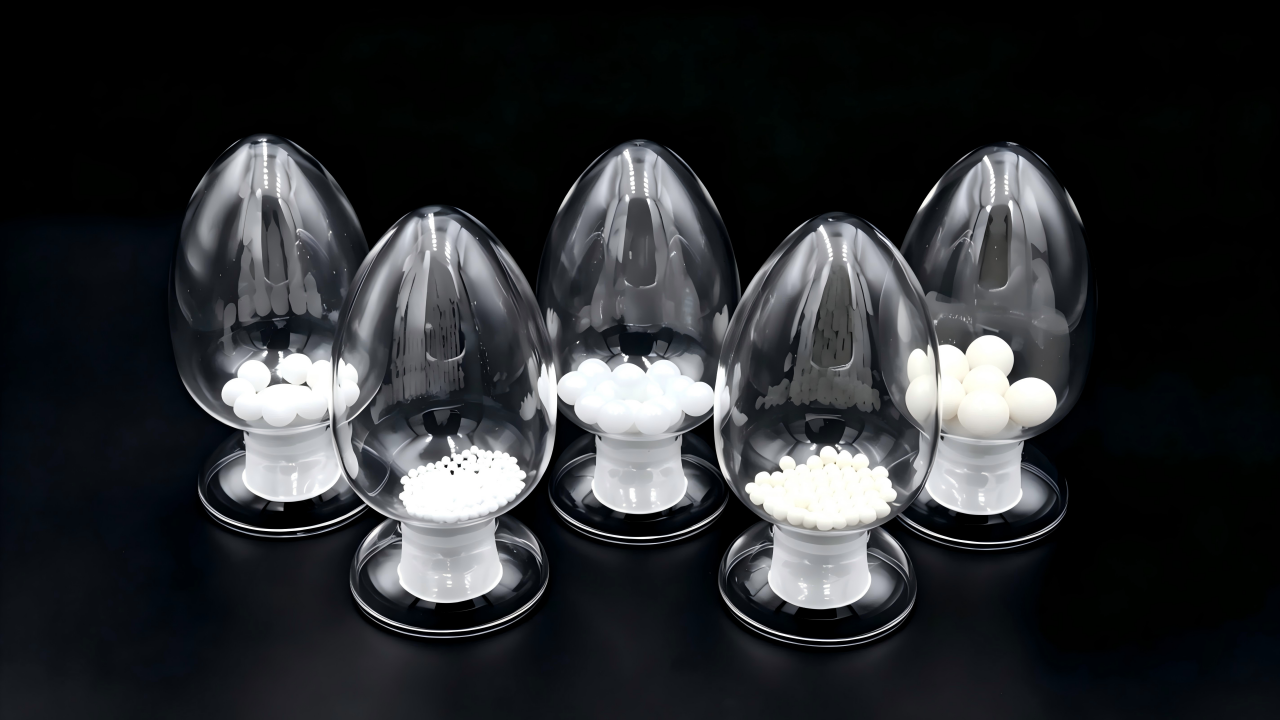
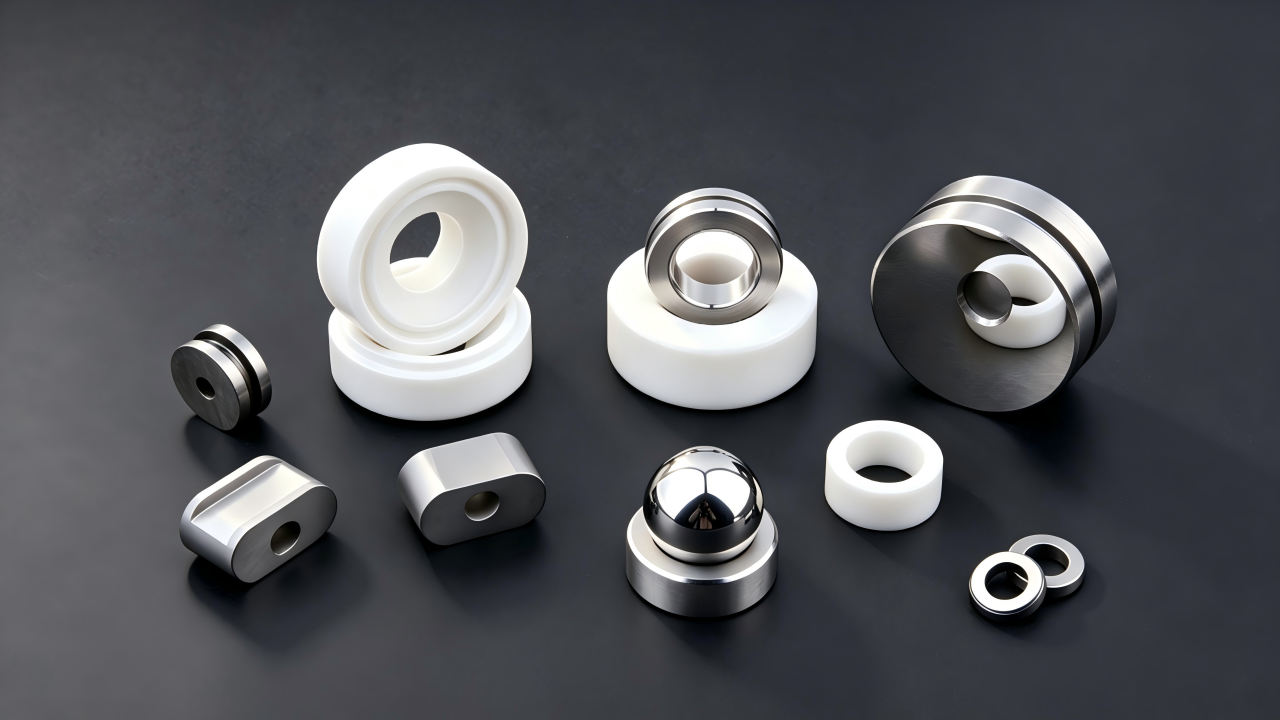
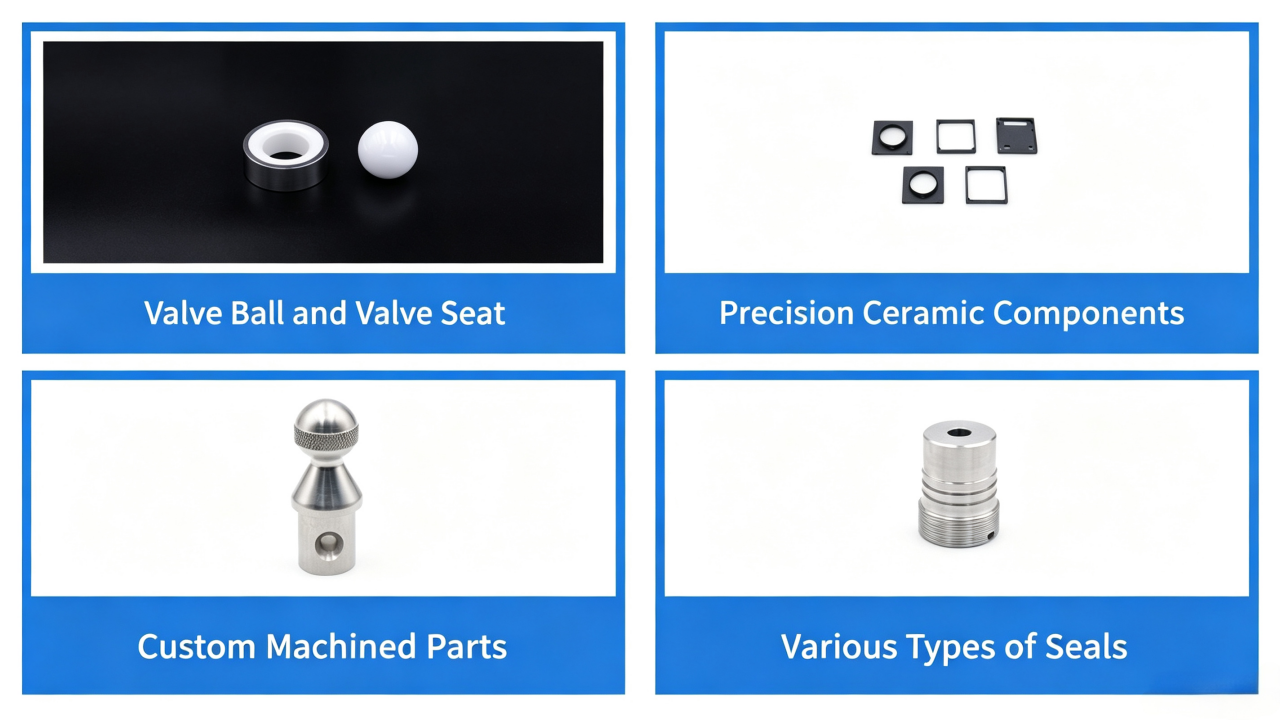
Основные категории продукции: высокоточные сферические компоненты, подшипники и сборочные узлы подшипников, шарики и седла клапанов, а также индивидуальные прецизионные детали неправильной формы. Обрабатываемые и применимые материалы: керамика (цирконий, алюминий, нитрид кремния, карбид кремния и др.), цементированные твёрдые сплавы (YG3X, YG6, YG6X, YG8, YG8N, YG13, YN6, YN9, YN10 и др.), сплавы монель (MONEL K400, MONEL K450, MONEL K500 и др.), нержавеющая сталь (304, 316, 316L, 410, 420, 440C и др.), сплавы инконель (Inconel 600, Inconel 601, Inconel 625, Inconel 718 и др.), сплавы стеллит (Stellite 6B, Stellite 1, Stellite 4, STELLITE 8, STELLITE 12, STELLITE 20 и др.), чистые металлы (алюминий, медь, железо и др.), другие металлы (подшипниковая сталь CGr15, титановый сплав TC4, Hastelloy C276 и др.), пластмассы (POM, PP, PA, BB, PEEK, PTFE и др.), стекло (оптическое стекло и др.).

Read More
comparison of performance and applications of four major ceramic ball materials

Сравнение характеристик и областей применения четырёх основных типов керамических шаров: циркониевые / алюминиевые / карбид кремния / нитрид кремния

Керамические шарики широко применяются в прецизионных подшипниках, медицинских устройствах, аэрокосмической отрасли, автомобилестроении, а также в оборудовании, работающем при высоких температурах и стойком к коррозии. Керамические шарики, изготовленные из различных материалов, существенно различаются по таким ключевым свойствам, как твердость, плотность, термостойкость и стойкость к коррозии. Ниже представлена сравнительная таблица параметров четырёх основных типов керамических шариков, которая поможет выбрать подходящий продукт. Параметр | Циркониевые керамические шарики | Алюминиевые керамические шарики | Карбидкремниевые керамические шарики | Нитридкремниевые керамические шарики ---|---|---|---|--- Внешний вид | Молочно-белый/бежевый | Высокоглянцевая, гладкая поверхность | Чрезвычайно высокая степень обработки поверхности | Чисто белый Твёрдость | Очень твёрдая текстура | Ровная и однородная поверхность | Чёрновато-серый цвет | Матовая поверхность Плотность | 3,2–3,25 г/см³ | 3,9 г/см³ | 6,05 г/см³ | 3,2–3,25 г/см³ Твёрдость по Роквеллу (HRA) | 89–90 | 88–89 | 92–93 | 91–92 Термостойкость (°C) | 1000°C | 1200°C | 1600°C | 1300°C Прочность на сжатие (МПа) | 2000 | 1800 | 2200 | 2100 Стойкость к коррозии | Устойчивы к кислотам и щелочам | Коррозионностойкие | Отличная стойкость к старению | Устойчивы к слабым кислотам и щелочам; с осторожностью использовать в средах сильных кислот и щелочей | Чрезвычайно высокая стойкость к коррозии | Устойчивы к сильным кислотам и щелочам | Стойки к эрозии растворителями | Превосходная стойкость к коррозии | Подходят для различных агрессивных химических сред | Изоляционные свойства | Высокая изоляция | Непроводящий материал | Антистатический | Ультравысокая изоляция | Стабильные электрические характеристики | Полуизолирующий | Слабая электропроводность | Высокая изоляция | Термостойкость без утечки тока | Основные особенности | Отличная ударная вязкость | Устойчивость к сколам и трещинам | Высокая степень обработки поверхности | Износостойкий и бесшумный | Высокая точность | Высокая экономичность | Достаточная твёрдость | Хорошая изоляция | Стойкость к высоким температурам и окислению | Однородная текстура | Чрезвычайно универсальный | Ультратвёрдый и сверхизносостойкий | Ультравысокая термостойкость | Превосходная стойкость к коррозии | Низкий коэффициент трения | Устойчивость к высоким температурам и давлениям | Чрезвычайно долгий срок службы | Высокая ударная вязкость | Устойчивость к термическому шоку | Сопротивление чередующимся высоким и низким температурам | Устойчивость к износу и усталости | Лёгкий вес | Устойчивость к перегреву и повреждениям при высокоскоростной работе | Основные отрасли применения | Прецизионные подшипники | Медицинские устройства | Оборудование для пищевой промышленности | Клапаны и сердечники клапанов | Электронное оборудование | Прецизионные инструменты | Компоненты высокоскоростной трансмиссии | Химическая упаковка | Шлифовка и полировка | Компоненты оборудования | Уплотнители | Стандартные подшипники | Компоненты бытовой техники | Оборудование для очистки воды | Высокотемпературное оборудование | Оборудование, стойкое к химической коррозии | Аэрокосмическая отрасль | Металлургическое оборудование | Компоненты, выдерживающие высокое давление и износ | Компоненты для экстремальных условий эксплуатации | Прецизионные подшипники для высокоскоростных механизмов | Оборудование для ветроэнергетики | Прецизионные компоненты автомобильной промышленности | Аэрокосмическая отрасль | Высокотемпературное энергетическое оборудование | Пожалуйста, свяжитесь со службой поддержки клиентов для уточнения информации о цветах по индивидуальному заказу. Если вам необходимы керамические шарики специальной формы, пожалуйста, укажите требуемые размеры, допуски и условия эксплуатации. Наша техническая команда разработает для вас индивидуальное решение. Не стесняйтесь отправить нам свои чертежи и спецификации — мы предоставим бесплатный расчёт стоимости.

Read More
about jne

Об JNE

Основанная в 2016 году и имеющая штаб‑квартиру в городе Цзясин провинции Чжэцзян, компания “JNE New Materials Co., Ltd.” является высокотехнологичным предприятием национального уровня, специализирующимся на исследованиях и разработках, интеллектуальном производстве и внедрении в промышленное использование новых материалов высокого класса. Компания специализируется на изготовлении высокоточных сфер, сверхточных компонентов подшипников, высокоточных седел шаровых клапанов, а также различных нестандартных прецизионных деталей по индивидуальным заказам. В производстве используются широкий спектр высококачественных сырьевых материалов, включая диоксид циркония, нитрид кремния, карбид кремния, оксид алюминия, твердые сплавы, немагнитные сплавы, высокоплотные сплавы, нержавеющую сталь, сапфир, пластик и стекло. Ассортимент продукции охватывает полный ряд категорий, включая передовые керамики, твердые сплавы, специальные сплавы, прецизионные металлы и пластики. Благодаря комплексным техническим характеристикам и выдающейся точности наши изделия соответствуют строгим эксплуатационным стандартам, необходимым для самых требовательных высокотехнологичных применений. В сфере управления компания придерживается стандартизированной, систематизированной и утончённой модели работы, характеризующейся чёткой внутренней организационной структурой и надёжной системой управления. Компания сертифицирована по международным стандартам ISO 9001:2015 (система менеджмента качества), ISO 14001:2015 (система экологического менеджмента) и ISO 45001:2018 (система управления охраной труда и промышленной безопасностью). С технологической точки зрения компания последовательно следует стратегии развития, основанной на инновациях, уделяя особое внимание исследованию и разработке собственных ключевых технологий и их стратегической защите в виде интеллектуальной собственности. На сегодняшний день компания получила в общей сложности 35 собственных патентов, включая 10 изобретений и 25 полезных моделей. Опираясь на обширный портфель запатентованных технологий, компания создала прочные ключевые технологические барьеры, постоянно совершенствуя продукцию, повышая её точность, эксплуатационные характеристики и уровень добавленной стоимости, тем самым уверенно укрепляя своё лидирующее положение в отрасли. В производственной сфере компания располагает современным высокостандартным производственным комплексом площадью свыше 3 000 квадратных метров. Оборудованный типовыми чистыми комнатами, передовым интеллектуальным производственным оборудованием и полным набором высокоточных физико‑химических испытательных приборов, комплекс сочетает возможности крупносерийного массового производства с гибкими возможностями индивидуальных научно‑исследовательских и опытно‑конструкторских работ, обеспечивая достаточную производственную мощность и своевременную доставку. Одновременно компания внедрила комплексную систему услуг «от начала до конца», предоставляя клиентам всестороннее и внимательное обслуживание — от проектирования решений и создания прототипов до массового производства, интеграции технологий и послепродажной поддержки — чтобы гибко удовлетворять индивидуальные потребности разных заказчиков в персонализированной адаптации. Что касается продуктов, то предлагаемая компанией продукция широко применяется во многих высокотехнологичных и передовых отраслях, включая авиакосмическую промышленность, высокоточные медицинские приборы, оборудование для полупроводниковой отрасли, устройства для работы с новыми источниками энергии, технологии связи 5G, системы высокоточной гидравлики и пневматики, точные приборы и измерительные устройства, промышленные клапаны для жидкостей, а также оборудование для интеллектуальной автоматизации. Благодаря своей безупречной репутации компания завоевала глубокое доверие многочисленных клиентов из различных отраслей. Её сбытовая сеть охватывает всю страну, а продукция экспортируется как на внутренний рынок, так и на зарубежные рынки. Коллектив компании «JNE» неизменно придерживается основных культурных ценностей предприятия — «Высокое качество, преданность делу и исключительное совершенство». Мы следуем своим основополагающим принципам мастерства, честности и прагматичного прогресса, создавая премиальные продукты по самым строгим стандартам и формируя лояльную клиентскую базу благодаря искреннему сервису. Заглядывая в будущее, компания намерена продолжать наращивать инвестиции в научно‑исследовательские и опытно‑конструкторские работы, сосредоточиться на технологических инновациях и модернизации производства, стремясь создать первоклассный отечественный бренд в сфере интеллектуального производства высокоточных новых материалов. Мы искренне приглашаем партнёров из всех секторов объединить усилия, совместно работать и вместе открывать новые возможности в отрасли, создавая новое будущее сотрудничества.

Read More